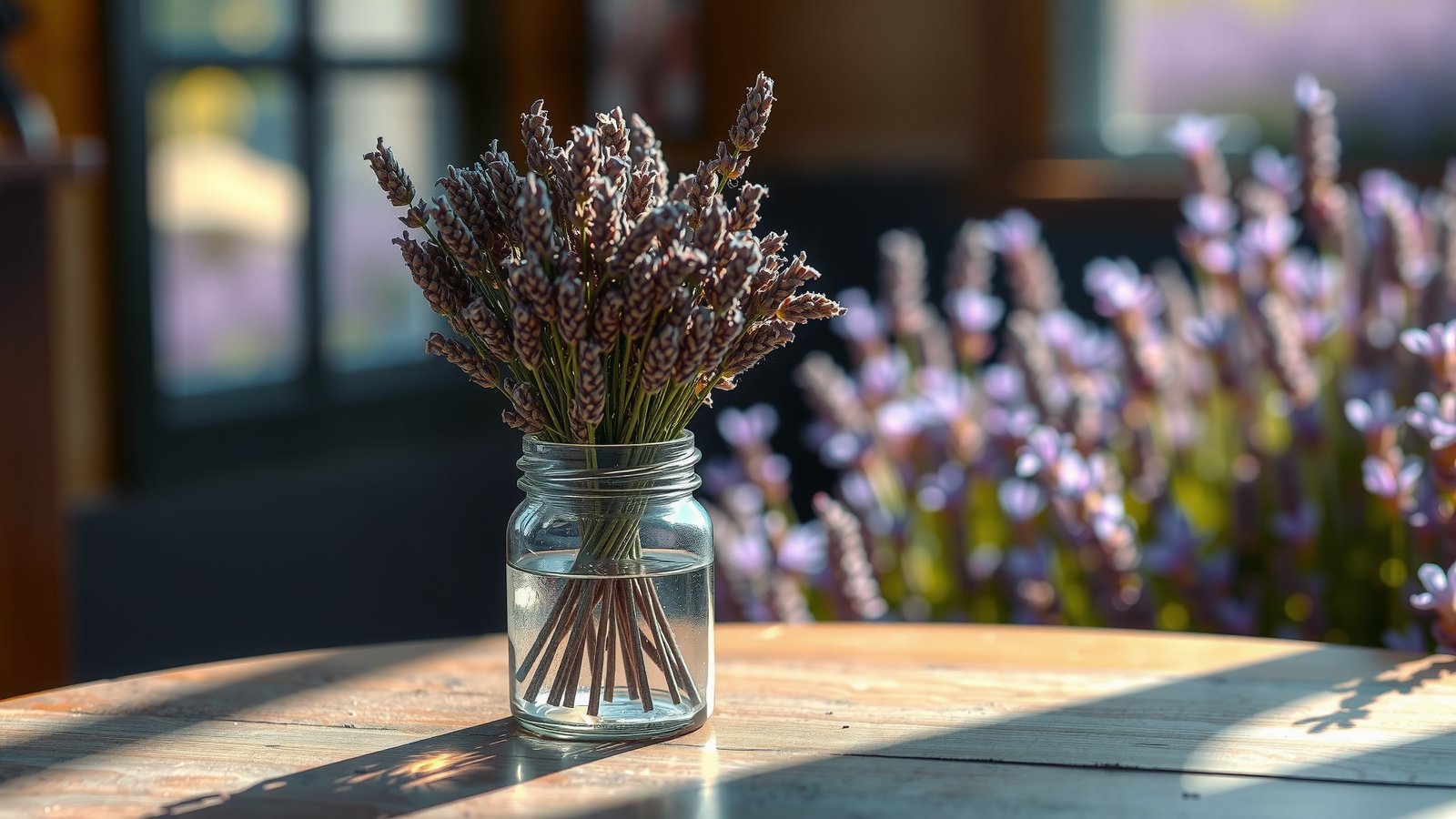
Lavender is the most beloved essential oil in the world.
But —
“Does it really help you sleep?“
“What’s the difference between cheap and expensive?“
“How many drops? Can children use it?“
This article answers honestly — avoiding both overpromising and dismissal.
Lavender is one of the few essential oils with strong research evidence.
But not because it’s a “miracle oil” — because it’s a precise chemical compound.
From 5,000 years of tradition to 2,000+ modern studies — we’ll uncover lavender’s true nature from both angles.
By the end, you’ll know exactly which bottle on the shelf is the real thing — and why the cheaper one right next to it is a different plant entirely.
💎 Key Takeaway
Lavender isn’t “a nice smell” — it’s a collection of pharmacologically active compounds: linalool and linalyl acetate. That’s why research proves its effects, and that’s why correct usage matters.
30-Second Summary
- Lavender has the strongest research evidence of any essential oil
- Main constituents: Linalool (25-38%) + Linalyl acetate (25-46%)
- Effects: Sleep improvement, anxiety relief, mild skin regeneration confirmed
- Most trusted variety: True Lavender (Lavandula angustifolia)
- Safe dilution: adults 1-3%, children 0.5-1%
- Avoid during early pregnancy, infants, with epilepsy
- Cheap “lavender” is often lavandin — different chemistry, different effects
1. What Is Lavender | Starting From Botany
1-1. Distinguishing the 4 Main Species
“Lavender” actually refers to 4 different species sold as essential oils. Without knowing this, you’ll buy the wrong one.
| Botanical Name | Common Name | Origin | Price | Use |
|---|---|---|---|---|
| Lavandula angustifolia | True Lavender | France, Bulgaria | Medium-High | Sleep, anxiety, all-purpose |
| Lavandula latifolia | Spike Lavender | Spain | Medium | Respiratory |
| Lavandula × intermedia | Lavandin | Southern France | Low | Cleaning products |
| Lavandula stoechas | Stoechas | Mediterranean | High | Antimicrobial (caution) |
1-2. Why True Lavender Is King
Over 95% of research uses Lavandula angustifolia (true lavender).
This means:
– “Lavender helps sleep” research → True lavender
– “Reduces anxiety” research → True lavender
– “Skin regeneration” research → True lavender
Cheap lavandin has different chemistry — research-confirmed effects don’t apply.
1-3. Always Check “Lavandula angustifolia”
If the bottle doesn’t show the botanical name, don’t buy it.
2. 5,000 Years of History
2-1. Ancient Egypt (3000 BCE)
Lavender-scented jars were discovered in Tutankhamun’s tomb.
Used in royal mummification for its antimicrobial properties.
2-2. Ancient Rome (1st century BCE)
Romans used lavender for bathing.
“Lavender” comes from Latin “lavare (to wash)” — “the flower for washing“.
2-3. Medieval Europe (11-15th centuries)
Grown in monasteries as medicinal herb, used for plague defense (limited effectiveness, but antimicrobial properties exist).
2-4. Birth of Modern Aromatherapy (1937)
French chemist René-Maurice Gattefossé burned his hand in an experiment and quickly plunged it in lavender oil — experiencing remarkable healing.
This sparked the word “aromathérapie“.
2-5. Modern Day (Since 1980s)
Medical aromatherapy established in UK, France, Germany.
3. Chemical Constituents | Why It’s More Than “Just a Scent”
3-1. Remember 2 Main Components
| Component | Content | Action |
|---|---|---|
| Linalyl acetate | 25-46% | Sedative, anxiolytic, antispasmodic |
| Linalool | 25-38% | Sedative, antimicrobial, anti-inflammatory |
Together they make up 50-80% of the oil.
3-2. Linalool’s Pharmacological Actions (Research-Confirmed)
- GABA receptor action (mechanism similar to benzodiazepines)
- Cortisol reduction
- Parasympathetic activation
- Mild analgesia
3-3. Other Active Components
- 1,8-cineole (small amounts): respiratory support
- Camphor (small amounts): activating
- Terpinen-4-ol: antimicrobial
3-4. Why Quality Varies
Chemistry varies with origin, harvest timing, distillation method.
Quality lavender:
– Grown at 800-1500m altitude
– Harvested at peak bloom in summer
– Steam distilled within 2 hours
– GC-MS analysis verifies composition
4. Scientific Effects | What’s Proven, What’s Not
4-1. ✅ Strong Evidence: Sleep Improvement
Meta-analysis results:
– 15 randomized trials analyzed
– Inhaled lavender shortened sleep onset by 5-8 minutes on average
– Sleep quality scores improved
– Moderate effect size
→ “Lavender for insomnia nights” — not superstition, but fact.
4-2. ✅ Strong Evidence: Anxiety Relief
- Silexan (oral lavender capsule, approved medicine in Germany) extensively studied
- For mild-to-moderate anxiety, effects comparable to SSRIs in some trials
- But oral use is medical only
4-3. ✅ Moderate Evidence: Post-Surgical Pain Reduction
- Studies on C-sections, tonsillectomies show reduced analgesic use
4-4. ✅ Moderate Evidence: Burns and Cuts Healing
- Gattefossé’s experience is partly scientifically supported
- Animal studies show accelerated wound healing
4-5. ⚠️ Weak Evidence: Hair Growth
- Mouse studies show promotion
- Human studies still limited in quality
4-6. ❌ No Evidence: “Vibrations,” “Spiritual Cleansing”
- Often marketed but no scientific basis
- Placebo effects of “believing it works” exist, but nothing beyond that is proven
5. Use-Case Specific Application | Exact Dilution and Drops
5-1. Sleep (Insomnia Relief)
Method A: Diffuser
– 5-8 drops in 100ml diffuser
– Start 1 hour before bed, run 30-60 minutes
Method B: Pillow Spray
– 5ml anhydrous ethanol + 6-10 drops oil + 45ml distilled water
– 1-2 sprays on pillow (avoid face)
Method C: Foot Massage
– 10ml carrier oil + 2 drops (1% dilution)
– Massage feet in circles before bed
5-2. Anxiety and Stress
Method A: Inhalation
– 2-3 drops on tissue
– 2-3 times daily, 3 deep breaths
Method B: Aroma Bath
– Full bath: 3-5 drops mixed with salt or emulsifier first (never directly)
– Soak 15-20 minutes
5-3. Minor Burns and Insect Bites
Traditionally one of the few oils for neat application — but modern safety standards recommend dilution.
Recommended:
– 10ml rosehip oil + 4-6 drops (2-3%)
– Apply to affected area 2-3 times daily
5-4. Sensitive Skin
- 10ml jojoba oil + 1-2 drops (0.5-1%)
- Patch test required
5-5. Headaches
- 5ml carrier oil + 1 drop, apply to temples and neck
- Don’t rub hard
5-6. Focus (Surprising Use)
Lavender is a sedative, but small amounts for short periods can aid focus:
– 3 drops only in diffuser
– Maximum 30 minutes
6. Absolute Safe Dilution Rules
6-1. By Age
| Target | Maximum Dilution |
|---|---|
| Adult (face) | 1-2% |
| Adult (body) | 2-3% |
| Elderly | 0.5-1% |
| Pregnant (2nd-3rd trimester) | 1% (with doctor’s clearance) |
| Children (6+) | 0.5-1% |
| Children (2-5) | 0.25-0.5% |
| Infants (under 2) | Not recommended |
6-2. Formula
- 1% dilution = 2 drops in 10ml carrier oil
- 2% dilution = 4 drops in 10ml
- 3% dilution = 6 drops in 10ml
6-3. Patch Test
For new oils or sensitive skin:
1. Apply diluted oil to inner arm
2. Wait 24 hours
3. If no redness or itching, safe to use
7. Contraindications and Cautions
7-1. Absolute No
- Use on infants under 2
- Oral neat ingestion (except medical Silexan)
- Contact with eyes
- Widespread long-duration diffusion
7-2. Caution Required
- Early pregnancy: avoid
- Epilepsy: avoid high concentrations
- Low blood pressure: may worsen
- Pets: especially cats metabolize lavender slowly, toxicity risk
7-3. Drug Interactions
- Sleep medications: synergistic over-sedation possible
- Anti-anxiety medications: same
- Blood pressure medications: may amplify hypotension
8. Blend Recipes | Top 3 by Purpose
8-1. Bliss Sleep Blend
- Lavender: 3 drops
- Sweet orange: 2 drops
- Cedarwood: 1 drop
→ Diffuse 1 hour before bed
8-2. Morning Anxiety Reset
- Lavender: 2 drops
- Bergamot: 3 drops
- Frankincense: 1 drop
→ Tissue inhalation or diffuser
8-3. Women’s Hormone Support
- Lavender: 3 drops
- Clary sage: 2 drops
- Geranium: 1 drop
→ Aroma bath (avoid during pregnancy)
9. How to Choose Quality Lavender Oil
9-1. 6 Items to Verify
✅ Botanical name (Lavandula angustifolia)
✅ Country of origin (France/Bulgaria preferred)
✅ Plant part (flower spike)
✅ Extraction method (steam distillation)
✅ Batch number, expiration
✅ Dark glass bottle
9-2. Trusted Brands
- doTERRA (international)
- Young Living (international)
- Plant Therapy (research-grade)
- PRANAROM (medical-grade Belgium)
- Neal’s Yard Remedies (organic UK)
9-3. Price Reference
10ml bottle:
– Under $15: lavandin or fake possible
– $15-30: standard true lavender
– Over $30: high-altitude organic
“Too cheap” is a warning sign.
9-4. Online Shopping Cautions
- Don’t trust “best-seller” labels alone
- Check botanical name, not review count
- Beware “medical grade” claims from uncertified brands
10. Storage
10-1. 3 Storage Principles
- Dark: no sunlight (maintain amber/blue bottle)
- Cool: ideal 15-20°C, refrigerator recommended
- Sealed: close cap immediately after use
10-2. Shelf Life
- After opening: 1-2 years
- Lavender is relatively stable (vs 6 months for citrus)
- Check by smell: discard if oxidized or harsh
11. Combining With Music and Frequencies
Lavender’s effects can be amplified when combined with 528Hz Solfeggio or nature sounds.
Research shows:
– Sound + aroma combinations reduce cortisol more than aroma alone
– Visual stimulation (warm lighting) adds multi-sensory effect
Recommended combinations:
– 528Hz BGM + lavender + warm lighting in bedroom
– Silent ambient + lavender + frankincense during meditation
12. A Hypothetical Example: An 8-Week Routine for Sleep Onset
Starting Point (Illustrative)
- Long-standing difficulty falling asleep
- Sleep onset averaging around 90 minutes
- Frequent nighttime waking
A Possible Routine
Week 1: Diffuser, 5 drops lavender, 1 hour before bed
Week 2: Continue + 4-7-8 breathing before bed
Week 3: Continue + fixed bedtime (e.g., 11pm)
Week 4-8: Continue, add lavender + cedarwood blend
A Possible Outcome (Illustrative, Not a Documented Case)
In a routine like this, sleep onset might gradually shorten and nighttime waking might decrease as the habits become consistent. This is a generalized illustration, not a documented individual result, and actual outcomes vary widely by person.
Takeaway
Lavender alone may help somewhat, but combining it with breathing exercises and a regular bedtime is generally described as more effective than aroma alone.
When people say “lavender didn’t work for me,” it is often because these other supporting habits were missing.
13. FAQ
Q1. Can I use it without a diffuser?
A. Yes. 2-3 drops on a tissue by your pillow works well.
Q2. Daily use long-term — safe?
A. With proper dilution, yes. After 2 weeks of daily use, take 1-2 weeks off to prevent olfactory desensitization.
Q3. Can you be allergic to lavender?
A. Rarely. Patch test essential. Stop if rash or itching develops.
Q4. Does it affect hormones?
A. A “puberty boy” study exists but with very small sample size and questionable replication. No need for excessive worry.
Q5. Cat at home — safe?
A. Use caution. Cats poorly metabolize lavender. Ensure cat has a separate escape room when diffusing, avoid prolonged use.
Q6. Expensive vs cheap oil — what’s the difference?
A. Mainly raw material quality (altitude, harvest, distillation) and active component concentration. $20-30 true lavender is sufficient.
Q7. Can I apply directly to skin?
A. Lavender is exceptionally cleared for neat use in small amounts, but modern safety recommends dilution. Err on the safe side.
Q8. How many drops in a bath?
A. 3-5 drops. Mix first with 1 tbsp salt or emulsifier before adding to water.
14. Conclusion ── Lavender Is “Gentle Science”
Lavender is
chemistry, not coincidence.
Research, not mysticism.
Effects, not miracles.
Linalool and linalyl acetate —
what Egyptians knew 5,000 years ago,
modern researchers have confirmed with fMRI and blood markers.
No need for excessive expectations.
But no need for excessive denial either.
Used correctly, lavender has the power to
reliably change your sleep, starting tonight.
A $25 bottle.
Lasts 2 years.
Calms heart and body every night.
Few healing tools have a higher value-for-money ratio.
Tomorrow,
visit a trusted shop,
check “Lavandula angustifolia,”
and buy one bottle.
Tonight,
put 2 drops on a tissue,
place it by your pillow.
Tomorrow morning,
the world may look just a little different.
References
- Koulivand, P. H., Khaleghi Ghadiri, M., & Gorji, A. (2013). “Lavender and the nervous system.” Evidence-Based Complementary and Alternative Medicine.
- Donelli, D. et al. (2019). “Effects of lavender on anxiety: A systematic review and meta-analysis.” Phytomedicine.
- Karadag, E. et al. (2017). “Effects of aromatherapy on sleep quality and anxiety.” Nursing in Critical Care.
- Tisserand, R. & Young, R. (2014). Essential Oil Safety (2nd ed.). Churchill Livingstone.
- Buckle, J. (2014). Clinical Aromatherapy (3rd ed.). Elsevier.
MuZenCosmos — Where stillness meets the cosmos | The true power of lavender
This article does not guarantee any medical or health benefit and is not a substitute for professional medical care. If you have any health concerns, please consult a physician or other qualified professional.
📚 Related Articles
- Aromatherapy & Essential Oils Complete Guide: The Science of Healing Through Scent
- Introduction to Ayurveda: 5,000-Year Indian Medicine for Constitutional Living
- Complete Holistic Wellness Integration: The Science of Unifying Body, Mind, and Spirit [Hub Article]
- Sun Salutation (Surya Namaskar) Complete Guide: 12 Poses to Transform Your Day