“I want to do 5 minutes of yoga every morning.“
“If I had to learn just one thing, what would it be?“
The answer is clear: Sun Salutation (Surya Namaskar).
This is yoga’s complete form — 12 poses flowing as one continuous sequence.
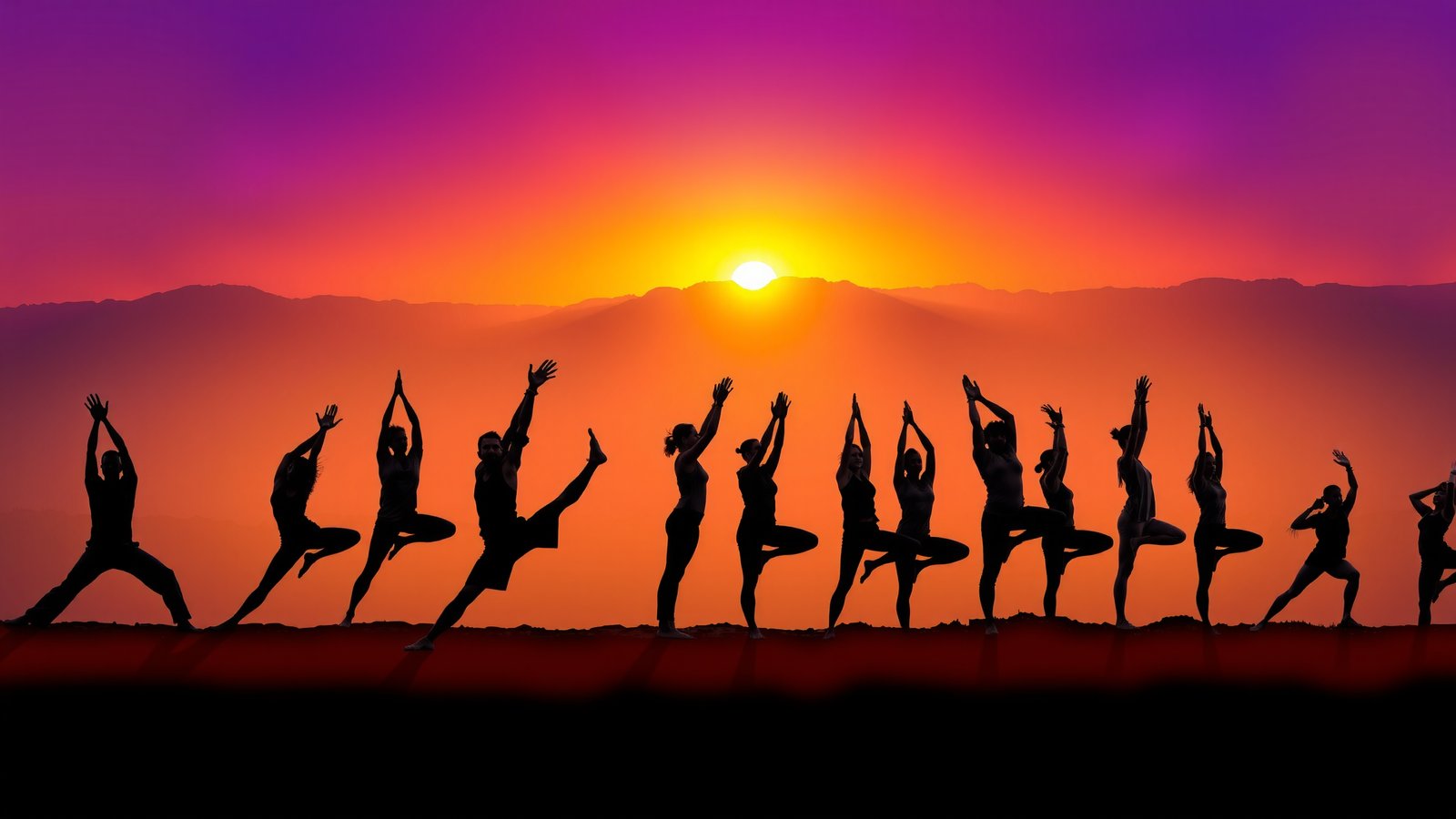
It offers gratitude to the sun while activating the entire body.
- Full-body workout: all major muscle groups in 1 round
- Flexibility: forward bends, backbends, side bends
- Cardio: moderate aerobic
- Focus: synchronized with breath = moving meditation
- Energy awakening: ideal day starter
And best of all, 5 minutes is enough.
This article gives the complete guide usable from beginner to advanced.
💎 The One-Line Takeaway
Sun salutation is “moving meditation.” Layer breath onto 12 poses each morning — one round can change your life.
30-Second Summary
- Sun Salutation = 12 connected poses
- Traditional “gratitude to the sun“
- 5 minutes per round
- A and B versions
- Morning fasted state ideal
- 3-12 rounds per session
- Full body, flexibility, focus at once
1. What Sun Salutation Is
1-1. Word Meaning
Sanskrit:
– Sūrya: sun
– Namaskāra: salutation, greeting
“Salutation to the Sun.”
1-2. Historical Background
- Ancient Indian sun worship
- Early 20th century, “father of Indian physical culture” Bawasaheb Pant Pratinidhi systematized the modern form
- Now a staple in yoga classes worldwide
1-3. Meaning and Symbolism
- Sun = source of life
- 12 poses = 12 zodiac signs, 12 hours of day
- Expression of gratitude and cycle
2. Sun Salutation A — Full Sequence
12 poses synchronized with breath.
2-1. Pose 1 — Tadasana (Mountain)
Breath: natural
- Stand
- Feet together
- Hands in prayer at chest (Anjali Mudra)
- Spine erect
2-2. Pose 2 — Urdhva Hastasana (Upward Salute)
Breath: inhale
- Reach arms overhead
- Slight backbend
- Gaze at thumbs
2-3. Pose 3 — Uttanasana (Standing Forward Fold)
Breath: exhale
- Fold from hips
- Hands to floor or shins
- Knees can bend
2-4. Pose 4 — Ardha Uttanasana (Half Standing Forward Fold)
Breath: inhale
- Lift upper body halfway
- Flat back
- Gaze forward
2-5. Pose 5 — Chaturanga Dandasana (Four-Limbed Staff)
Breath: exhale
- Step back to plank
- Lower elbows to just above ground
- Knees down OK for beginners
2-6. Pose 6 — Urdhva Mukha Svanasana (Upward Dog)
Breath: inhale
- Lift chest forward
- Thighs off floor
- Gaze up
2-7. Pose 7 — Adho Mukha Svanasana (Downward Dog)
Breath: exhale
- Lift hips high
- Inverted V shape
- Hold 5 breaths (optional)
2-8. Pose 8 — Ardha Uttanasana
Breath: inhale
- Step right foot forward
- Bring left foot to meet
- Half lift
2-9. Pose 9 — Uttanasana
Breath: exhale
- Full fold
- Head down
2-10. Pose 10 — Urdhva Hastasana
Breath: inhale
- Rise up
- Hands overhead
- Slight backbend
2-11. Pose 11 — Tadasana
Breath: exhale
- Hands to heart
- Prayer position
2-12. One Round Complete
5-15 min for 3-12 rounds.
3. Sun Salutation B (Ashtanga Style)
Adds warrior poses to A, more dynamic.
3-1. Sequence Overview
- Tadasana
- Urdhva Hastasana (inhale)
- Uttanasana (exhale)
- Ardha Uttanasana (inhale)
- Chaturanga (exhale)
- Upward Dog (inhale)
- Downward Dog (exhale, 5 breaths)
- Virabhadrasana I (Warrior I) right (inhale)
- Chaturanga (exhale)
- Upward Dog (inhale)
- Downward Dog (exhale)
- Virabhadrasana I left (inhale)
- Chaturanga (exhale)
- Upward Dog (inhale)
- Downward Dog (exhale, 5 breaths)
- Return to Uttanasana
- Urdhva Hastasana (inhale)
- Tadasana
3-2. Effects
- Stronger strength
- Leg strengthening
- Balance
4. Effects of Each Pose
4-1. Standing Forward Fold
- Hamstring/back stretch
- Blood flow to head
- Parasympathetic activation
4-2. Plank/Chaturanga
- Core/arm strengthening
- Posture improvement
- Metabolism boost
4-3. Upward Dog
- Chest opening
- Back strengthening
- Energy awakening
4-4. Downward Dog
- Full-body stretch
- Shoulder relief
- Improved leg circulation
5. Breath Synchronization
5-1. Basic Rules
- Opening/extending movement → inhale
- Closing/folding movement → exhale
- Match movement and breath length
5-2. Use Ujjayi Breath
In Ashtanga, ujjayi:
– Slight throat constriction
– Ocean sound
– Internal breath awareness
Details: Pranayama Complete Guide
5-3. Build Rhythm
- 4 sec inhale, 4 sec exhale
- 1 round target: 60-90 sec
6. Step-by-Step for Beginners
6-1. Step 1: Learn Individual Poses
- Practice each alone
- Memorize correct form
- Hold 5 breaths
6-2. Step 2: Sync With Breath
- Movement + breath
- Slow is fine
6-3. Step 3: Build the Flow
- 1 complete round
- Stabilize breath rhythm
6-4. Step 4: Multiple Rounds
- Start with 2
- Target 5
6-5. Step 5: Make It Daily
- 5 min every morning
- Said to take about 60 days to become a habit
7. Modifications for Difficulty
7-1. Hands Don’t Reach Floor
- Bend knees
- Use blocks
7-2. Chaturanga Is Hard
- Knees down
- Or stop at plank
7-3. Upward Dog Hurts
- Replace with cobra
- Wait for spinal flexibility
7-4. Heels Don’t Reach in Downward Dog
- Fine, don’t force
- Flexibility comes in weeks
7-5. Overall Too Tough
- 3 rounds only is OK
- Daily continuity matters most
8. Practice by Scenario
8-1. Morning (Recommended)
- After waking
- Fasted
- 5-15 min
- Ideal in sunlight
8-2. Evening
- Post-work refresh
- 3-5 rounds
8-3. Short Version
- 1 round still effective
- For busy mornings
8-4. Long Session
- Morning yoga practice
- 12 rounds complete practice
9. Variations
9-1. Chandra Namaskar (Moon Salutation)
- Moon version of sun salutation
- Gentler
- Lateral movements included
- For evening/menstruation
9-2. Shiva Namaskar
- Salutation to Shiva
- Backbend emphasis
9-3. Kripalu Style
- Slower, mindful
- Meditative
9-4. Power Yoga Style
- Fast pace
- Cardio focus
10. Sun Salutation and 108
10-1. Traditional Meaning
“108” is a sacred number in yoga/Hinduism:
- 12 zodiac × 9 planets
- Tradition of 108 mantra repetitions
- 108-bead japa mala
10-2. 108-Round Challenge
A practitioner rite of passage:
- Done on equinoxes/solstices
- Takes 1.5-3 hours
- Sense of achievement, deep transformation
10-3. 27 × 4 Days Also Works
If 108 in one go is too much, split practice.
11. Weight and Body Effects
11-1. Calorie Burn
- 1 round: ~13 kcal
- 12 rounds: ~160 kcal
- 30-min practice: ~180-250 kcal
11-2. Weight Loss
- Direct burn is moderate
- Stress reduction, sleep improvement → large indirect effect
- Continuation prevents rebound
11-3. Body Shape
- Uniform full-body toning
- Especially core and arms
12. Sun Salutation and Music
12-1. Traditionally Silent
Listening to breath is original.
12-2. With BGM
- 528 Hz
- Crystal bowls
- Indian classical
- Morning birdsong
12-3. With Mantras
Each pose has a bija mantra (seed sound):
| Pose | Mantra |
|---|---|
| 1 | Om Mitraya Namaha |
| 2 | Om Ravaye Namaha |
| 3 | Om Suryaya Namaha |
| … | … |
13. Cautions
13-1. Avoid When
- Within 2 hours of eating
- During menstruation (gentle if any)
- Pregnancy (avoid in late pregnancy)
- Fever
13-2. Injury Risks
- Wrists (chaturanga)
- Back (backbends)
- Hamstrings (folds)
13-3. Prevention
- Thorough warm-up
- Don’t push
- Stop on pain
14. 30-Day Sun Salutation Challenge
14-1. Plan
| Week | Rounds/Day |
|---|---|
| 1 | 3 rounds |
| 2 | 5 rounds |
| 3 | 7 rounds |
| 4 | 9-12 rounds |
14-2. After 30 Days
- Flexibility improved
- Strength up
- HRV (heart rate variability) up
- Focus up
- Mood stable
- Morning habit established
15. How to Choose Home Practice Props: A Checklist
Sun salutation involves a lot of hands and feet on the mat, so your mat choice shapes the quality of the whole practice.
- Grip: does it stay non-slip under sweaty palms during Chaturanga and Downward Dog?
- Thickness: enough cushioning to protect knees and wrists, without being so thick that it throws off your balance
- Length: enough room front-to-back for your height, so hands and feet don’t run off the edge when fully extended
- Ease of care: since you’ll use it daily, can it be wiped down or washed easily?
- Portability and storage: is the rolled-up size and weight something you’ll actually want to pull out every morning?
Comfortable clothing that doesn’t restrict your range of motion matters too, but it starts with one mat. That alone is enough to begin tomorrow morning.
16. FAQ
Q1. How many rounds should I do?
You can start with as few as 3 rounds. Once you’re comfortable, 5-12 rounds is a good target.
Q2. Is it OK to practice every day?
At moderate intensity, daily practice is generally fine. That said, taking one rest day a week gives your body time to recover.
Q3. Do I have to practice in the morning?
No, the time of day isn’t the strict rule — practicing on an empty stomach, at least 2 hours after eating, is the more important principle.
Q4. Can I teach this to kids?
Yes. Start with the simple Version A, around 3-5 rounds. Learning the pose names together can make it a fun introduction.
Q5. Can seniors practice sun salutation?
It can be a good option done slowly and without forcing. A chair-based version also exists — choose based on your fitness level and joint condition.
Q6. Is sun salutation enough exercise on its own?
It’s a strong full-body practice, but it isn’t a complete substitute for strength training or dedicated cardio. Pairing it with other movement tends to build more balanced fitness.
Q7. My wrists hurt. What can I do?
Chaturanga and Downward Dog put real load on the wrists. Dropping to your knees or spreading your fingers wide to distribute weight can help. If pain persists, don’t push through it — check with a professional.
Q8. Should I start with Sun Salutation A or B?
Start with A. Once the flow and breath feel stable, move on to B, which adds warrior poses. That order lets you build up without strain.
Q9. Can I practice during menstruation?
It depends on how you feel. Avoid strong forward folds and inversions if anything feels off, and rest or substitute the gentler Chandra Namaskar (Moon Salutation) as needed.
Q10. How long until I notice a difference?
Many people notice flexibility and posture changes within 2-4 weeks of consistent practice. Strength changes tend to follow a more gradual timeline, similar to the 30-day challenge outlined in Section 14.
17. Conclusion — Gratitude to Sun, Blessing of Day
Every morning, just 5 minutes.
12 poses.
Body wakes,
Breath deepens,
Mind quiets.
And gratitude to the sun.
That’s the morning ritual continuing 5,000 years.
Perfection not required.
Standing on the mat is the beginning.
Tomorrow morning, when the sun rises,
Try just 3 rounds.
Those 3 rounds will change your day,
And eventually, your life.
This article does not guarantee any medical or health benefit and is not a substitute for professional medical care. If you have any health concerns, please consult a physician or other qualified professional.
Related Articles
To deepen the breathwork behind sun salutation, see the Pranayama Complete Guide. To build out your whole morning, try Morning Routine or The Science of Yoga. We’ll cover chakra correspondences and Hatha vs. Ashtanga in future articles.
References
- Pratinidhi, B. P. (1928). The Ten-Point Way to Health: Surya Namaskars.
- Iyengar, B. K. S. (1966). Light on Yoga. Schocken Books.
- Jois, K. P. (2002). Yoga Mala. North Point Press.
- Bhavanani, A. B. et al. (2011). “Immediate cardiovascular effects of pranava pranayama.” Int J Yoga.
- Sinha, B. et al. (2013). “Energy cost and cardiorespiratory changes during Surya Namaskar.” Indian J Physiol Pharmacol.
MuZenCosmos — Where stillness meets the cosmos.