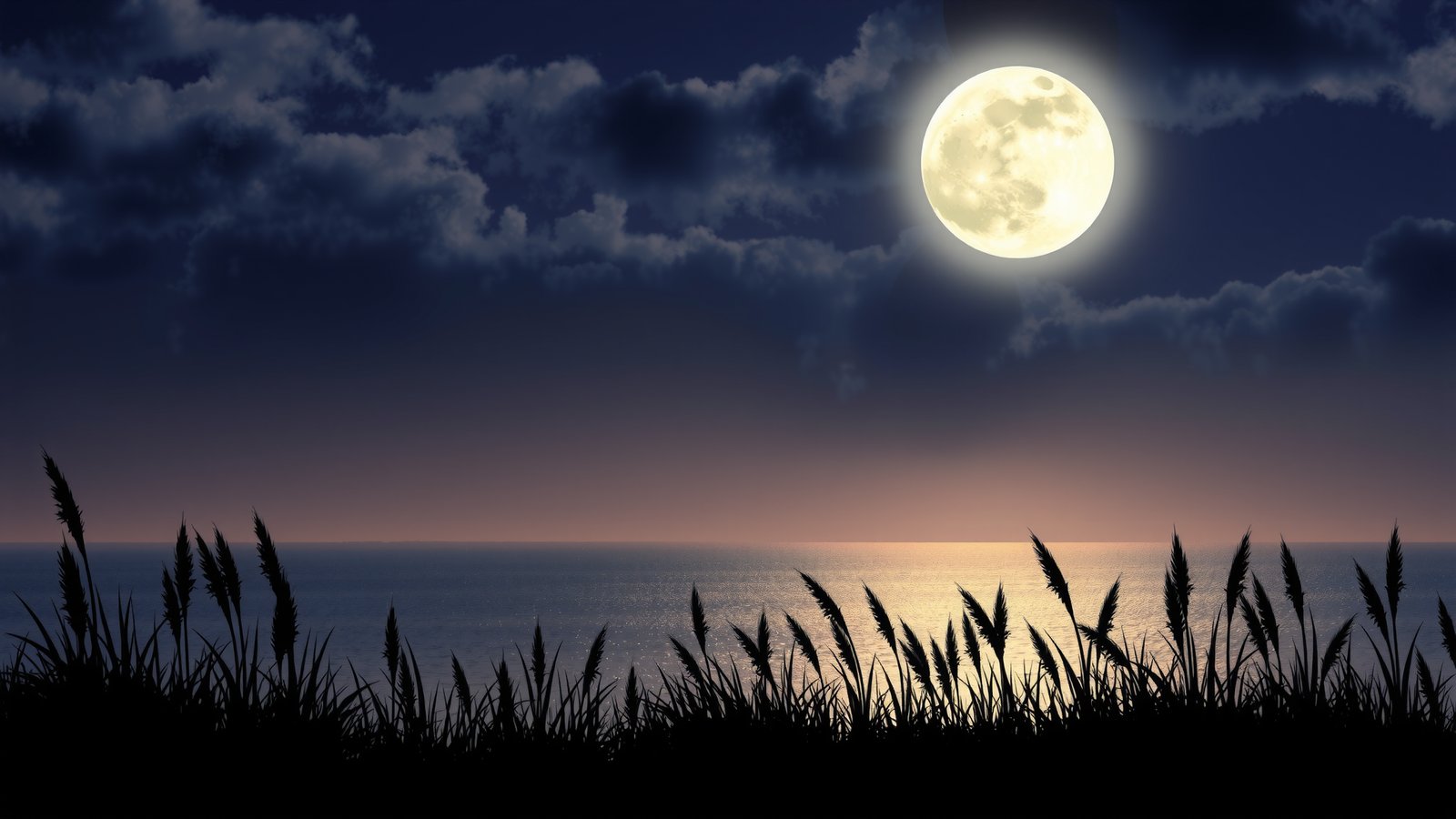
When did you last look up at the moon?
Full moon bright, new moon dark, crescent delicate —
for tens of thousands of years,
humanity knew the moon’s phases in our bodies.
But ever since electricity and street lamps lit the world,
the moon’s presence
has been disappearing from our lives.
And at the same time —
we feel like we’ve lost something.
Body rhythm, emotional waves,
dream depth, intuition sharpness.
Recovering “rhythm with the moon“
is recovering “the nature within yourself.”
And science is now verifying
the moon’s influence on body and life
with surprising precision.
The short answer
- What this guide covers: the basics of the lunar phases, moon culture around the world, and ways to enjoy new and full moons in daily life.
- What research shows: some studies found shallower, shorter sleep around the full moon, but results differ between studies. One study found that some women's cycles temporarily lined up with the moon.
- How to use it: moon rituals are not proven to work; enjoy them as a cue to notice the rhythm of your days.
1. The moon — Earth’s oldest partner
1-1. Basic data
| Item | Detail |
|---|---|
| Radius | 1,738 km (~1/4 of Earth) |
| Mass | ~1/81 of Earth |
| Distance | Average 384,000 km |
| Period | ~27.3 days (orbital), 29.5 days (synodic) |
| Gravity | ~1/6 of Earth |
1-2. Birth of the moon
Giant impact hypothesis:
– About 4.5 billion years ago
– Mars-sized body hit Earth
– Debris coalesced into moon
– Earth and moon = twins
1-3. Effect on Earth
- Tides: ocean tides are driven mainly by the moon's gravity
- Night light: before electricity, bright full-moon nights likely affected human and animal activity
2. Lunar cycle — four main phases
2-1. New moon
| Item | Detail |
|---|---|
| Appearance | Invisible (dark) |
| Sun relation | Same direction |
| Energy | Beginning, intention |
| Keywords | Seeding, new start |
How to spend:
– Write “what to start“
– Quiet time
– Vivid dreams
– Best for decluttering
2-2. First quarter
| Item | Detail |
|---|---|
| Appearance | Right half lit (N hemisphere) |
| Sun relation | 90° |
| Energy | Action, decision |
| Keywords | Challenge, forward |
How to spend:
– Turn new-moon intention into action
– Time for decisions
– Obstacles easily encountered
2-3. Full moon
| Item | Detail |
|---|---|
| Appearance | Fully round |
| Sun relation | Opposite direction |
| Energy | Peak, completion |
| Keywords | Harvest, release |
How to spend:
– Complete something
– Release what isn’t needed
– Emotions rise
– Moonbathing
– Gratitude ritual
2-4. Last quarter
| Item | Detail |
|---|---|
| Appearance | Left half lit (N hemisphere) |
| Sun relation | 90° |
| Energy | Release, organization |
| Keywords | Liberation, reflection |
How to spend:
– Review learnings
– Discard unneeded
– Important to rest
2-5. Eight detailed phases
Actually 8 phases cycle:
- New
- Waxing crescent
- First quarter
- Waxing gibbous
- Full
- Waning gibbous
- Last quarter
- Waning crescent
→ Full cycle: 29.5 days
3. The Moon and the Body: What Research Shows
| Study | What was examined | What was found | Keep in mind |
|---|---|---|---|
| Cajochen et al. 2013 retrospective lab analysis | Sleep of 33 people previously measured in a lab without time cues, matched afterward to lunar phase | Around the full moon, deep-sleep activity was 30% lower, falling asleep took 5 minutes longer, total sleep was 20 minutes shorter, and melatonin was lower | Small, and not designed to study the moon; other studies have not always agreed |
| Casiraghi et al. 2021 observational | Indigenous communities in Argentina (with and without electricity) and US city students wore wrist activity monitors | In the days before the full moon, people went to sleep later and slept less | The authors note that evidence on lunar effects on sleep has been controversial |
| Helfrich-Förster et al. 2021 observational | Long-term menstrual records kept by women | Cycles longer than 27 days were at times synchronous with the moon; this was lost with age and night-time artificial light | Seen in some women, intermittently; it does not explain menstrual problems |
What this adds up to: sleep changes around the full moon have been reported, but there is no firm conclusion, and the moon cannot be said to control mood or health. If you sleep poorly, look first at evening light and routine.
What we changed: an earlier version called the sleep effect strong evidence and described the 2013 study as observing 33 people for four years and proving lunar influence (it was a reanalysis of past data). It also claimed body tides because the body is 60% water and partial proof of effects on plants. We could not support these and revised them.
4. Moon Culture Around the World
4-1. Ancient Egypt
- Moon gods: Khonsu, Thoth
- Pharaoh coronations at new moon
- Calendar by lunar cycle
4-2. Ancient Mesopotamia
- Moon god: Sin
- Birth of astrology
- Detailed moon-motion records
4-3. Ancient Greece
- Moon goddesses: Artemis, Selene
- Triple goddess (maiden, mother, crone)
- Lunar cycle and life stages
4-4. Ancient India
- Moon is sacred
- Vedic moon rituals
- Ayurvedic lunar rhythm
- Shiva‘s crescent
4-5. Ancient Japan
- Moon-viewing culture (tsukimi)
- 15th-night, 13th-night moons
- “Princess Kaguya” (lunar culture’s pinnacle)
- Tsukuyomi (moon god)
4-6. Ancient China
- Chang’e (moon goddess)
- Mid-Autumn Festival
- Mooncakes
4-7. Native American
- Each month has full moon names:
- January: Wolf Moon
- April: Pink Moon
- September: Harvest Moon
4-8. Europe
- Triple goddess (myth)
- Celtic, Druid moon rituals
- Medieval lunar magic
4-9. Modern spiritual
- New Age moon ritual revival
- “New moon intentions” trending on Instagram
- As femininity symbol
5. Moon rituals — practical
5-1. New moon intentions
A well-known practice:
Steps:
1. Within 8 hours of new moon (ideal)
2. Quiet place, pen and paper
3. Write up to 10 wishes
4. Present tense (“X is realized, gratitude”)
5. Present-progressive, not past
6. Place paper under pillow or in bedroom
7. Review 1 month later
Points:
– Specific
– First person, not second
– End in “gratitude“
5-2. Full moon release
Letting-go ritual:
Steps:
1. Full moon night
2. Write what to release:
– Negative emotions
– Old habits
– Painful relationships
– Worries
3. Burn safely (fire safety!)
4. Or release to water
5. Toward moonlight: “thank you, goodbye“
5-3. Moonbathing
Full moon night:
– Bathe directly in moonlight (even through window)
– 20–30 minutes
– Open the heart
– Charge water in moonlight (moon water)
Notes:
– Summer: bug protection
– Cold nights: warm clothing
5-4. Moon Water
Some people set a glass jar of water by the window on a full-moon night and use it the next morning to water plants. Do not drink or wash your face with water left out overnight. No research shows moonlight changes water.
5-5. Moon yoga
Chandra Namaskar (Moon Salutation):
– Lunar version of sun salutation
– Soft, inward
– Ideal at full moon or night
5-6. Moon Meals
Using the lunar phases as a prompt for planning meals, such as lighter dishes at the new moon and seasonal treats at the full moon, can be fun. No research supports moon-timed detoxes or fasting; if you have a health condition, talk with your doctor before changing your diet.
6. Integrating lunar rhythm
6-1. Have a moon calendar
- App: My Moon Phase
- Buy paper lunar calendar
- Post on fridge
6-2. Moon journal
Daily:
– Today’s phase
– Mood
– Energy
– Body state
– Dreams
→ A few months reveals your patterns.
6-3. Moon and work
| Phase | Work use |
|---|---|
| New | New project vision |
| First quarter | Action, decision |
| Full | Completion, harvest |
| Last quarter | Organization, review |
6-4. Moon and relationships
- Full moon = emotions intense
- Avoid critical talks
- New moon = new connections
- Last quarter = relationship cleanup
6-5. Moon and Health
- If you sleep badly around the full moon, darken the bedroom and keep your usual bedtime
- If symptoms persist, do not blame the moon; see a doctor
6-6. Moon and nature
- Full moon walk
- New moon stargazing
- Seasonal moon viewing
7. Moon and femininity
7-1. Why is the moon “feminine”?
- Similar to menstrual cycle
- “Waxing-waning” rhythm
- Receptivity, introversion, night
- Triple goddess (maiden, mother, crone)
7-2. Menstruation and the Moon
Because the menstrual and lunar cycles are similar in length, they have long been linked. A study of long-term records found temporary alignment in some women (Helfrich-Förster et al. 2021), but there is no need to time your cycle to the moon. See a gynecologist for menstrual problems.
7-3. “Three phases of blood”
Traditional femininity:
– Maiden (until menarche)
– Mother (childbearing)
– Crone (post-menopause)
→ Mapped to lunar triple phases.
7-4. Everyone Can Enjoy the Moon
Seeing the moon as a symbol of femininity is a cultural view; enjoying the moon has nothing to do with gender.
8. FAQ
Q1. Why do some people feel the moon and others not?
A. Experiences differ. Bright full-moon nights, or simply knowing it is a full moon, may affect how people feel they slept.
Q2. Do new moon wishes come true?
A. No research shows that. Writing goals down is a useful way to review them.
Q3. Does moonbathing have health effects?
A. We found no research showing any. Enjoy it as an evening walk or time to look at the sky.
Q4. Tips for keeping a moon journal?
A. Use a moon-phase app and jot down mood and sleep; you may notice your own patterns.
Q5. Can I feel the moon in the city?
A. Yes. Looking out the window or checking a moon calendar is enough.
9. Conclusion
The moon waxes and wanes about every 29.5 days. Some research reports sleep changes around the full moon, but there is no firm conclusion. Enjoy moon rituals and a moon journal as cues to notice your own rhythm, not as treatments.
11 November 2026: We revised the science section using the original papers and removed unsafe or unsupported practices.
References
- Cajochen C, et al. (2013). Evidence that the lunar cycle influences human sleep. Current Biology 23(15):1485-1488. doi:10.1016/j.cub.2013.06.029
- Casiraghi L, et al. (2021). Moonstruck sleep: Synchronization of human sleep with the moon cycle under field conditions. Science Advances 7(5). doi:10.1126/sciadv.abe0465
- Helfrich-Förster C, et al. (2021). Women temporarily synchronize their menstrual cycles with the luminance and gravimetric cycles of the Moon. Science Advances 7(5). doi:10.1126/sciadv.abe1358
This article does not guarantee any medical or health benefit and is not a substitute for professional medical care. If you have any health concerns, please consult a physician or other qualified professional.