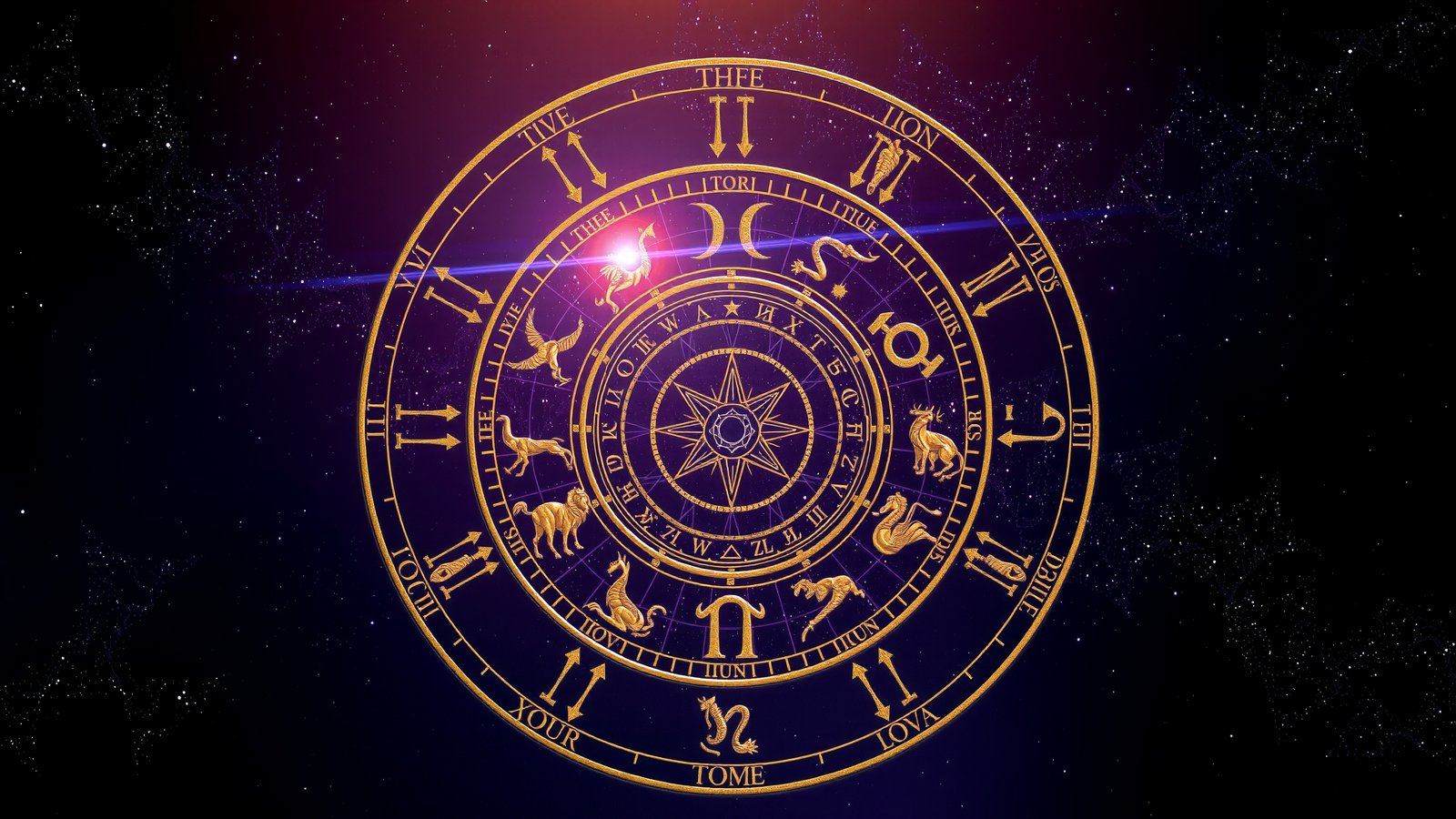
“What’s your sign?“
This is a universal question.
In Tokyo’s morning train, NYC cafes,
London pubs, Sydney beaches —
12 zodiac signs open conversations.
Why does a system devised by
Mesopotamian priests 5,000 years ago
remain so universal in the 21st century?
Scientists may call astrology “superstition.”
True — “Aries are passionate“
can’t be proven as physical law.
But as a psychological framework
for understanding people in 12 patterns,
it is surprisingly practical.
It’s a 5,000-year heritage of human wisdom
condensed into a form
we can use daily.
💎 Key takeaway
Astrology = “a psychological language using 12 archetypes for understanding self and others.” Not physical prediction, but a map of human understanding.
30-second summary
- Astrology = mapping celestial movements to human psychology
- 12 signs: Aries to Pisces
- 4 elements: fire (action), earth (stability), air (thought), water (emotion)
- 3 modalities: cardinal, fixed, mutable
- 3 main signs: Sun (self), Moon (emotion), Rising (outward)
- 5,000 years of Mesopotamian origin
- No scientific basis, but psychological use is valid
- Horoscope = personal map
1. What is astrology?
1-1. Core idea
“Heavenly movement” corresponds to “earthly phenomena.”
“As above, so below“
→ Hermetic principle.
1-2. Western vs Eastern astrology
| Item | Western | Eastern (Vedic) |
|---|---|---|
| Zodiac used | Tropical (equinox-based) | Sidereal (star-based) |
| Sign positions | Off by ~24° | Aligned with actual stars |
| Main regions | West, Japan | India, Nepal |
→ This article covers Western astrology.
1-3. “Language,” not “prophecy”
- Astrology is not future prediction
- A language to understand self and world
- Map of personality, tendencies, energy
1-4. Scientific view
- Physical causality: unproven
- Statistical verification: no effect (most studies)
- Psychological value: valid as framework
- Use as self-understanding tool
2. 5,000 years of history
2-1. Ancient Mesopotamia (3000 BC–)
- Sumer, Babylon birth
- Astrology systematized
- Reading royal fate
2-2. Ancient Egypt
- Nile flood prediction
- Star observation in temples
- Decans (10-day signs)
2-3. Ancient Greece (500 BC–)
- Pythagoras, Plato integrate with philosophy
- Ptolemy‘s Tetrabiblos (2nd c. AD)
- Foundation of Western astrology
2-4. Hellenistic
- Developed at Alexandria
- Personal horoscope established
- 12 signs + planets correspondence
2-5. Arab world (800 AD–)
- Al-Kindi, Al-Biruni
- Greek knowledge preserved/developed
- Re-exported to medieval Europe
2-6. Medieval Europe
- Universities taught it formally
- Integrated with medicine, astronomy
- Royal advisors
2-7. Scientific Revolution (17th c.–)
- Kepler, Galileo were astrologers too
- But astronomy separated
- Expelled from universities
2-8. Revival (19–20th c.)
- Alan Leo (UK) modern astrology
- Psychological approach
- Mass adoption
2-9. Contemporary
- Newspaper/magazine horoscopes
- Apps: Co-Star, The Pattern
- Gen Z revival
- Fusion with psychology
3. 12 signs — basics
3-1. 12 sign classification
4 elements:
| Element | Nature | Signs |
|---|---|---|
| Fire | Active, passionate | Aries, Leo, Sagittarius |
| Earth | Practical, stable | Taurus, Virgo, Capricorn |
| Air | Mental, social | Gemini, Libra, Aquarius |
| Water | Emotional, intuitive | Cancer, Scorpio, Pisces |
3 modalities:
| Modality | Nature | Signs |
|---|---|---|
| Cardinal | Initiate, lead | Aries, Cancer, Libra, Capricorn |
| Fixed | Maintain, deepen | Taurus, Leo, Scorpio, Aquarius |
| Mutable | Adapt, change | Gemini, Virgo, Sagittarius, Pisces |
→ 4 × 3 = 12 signs
3-2. Each sign in brief
Aries | 3/21–4/19
- Fire, Cardinal
- Ruler: Mars
- Keywords: pioneer, passion, competition
Taurus | 4/20–5/20
- Earth, Fixed
- Ruler: Venus
- Keywords: stability, senses, beauty
Gemini | 5/21–6/21
- Air, Mutable
- Ruler: Mercury
- Keywords: intellect, communication, curiosity
Cancer | 6/22–7/22
- Water, Cardinal
- Ruler: Moon
- Keywords: sensitivity, family, protection
Leo | 7/23–8/22
- Fire, Fixed
- Ruler: Sun
- Keywords: self-expression, leadership, pride
Virgo | 8/23–9/22
- Earth, Mutable
- Ruler: Mercury
- Keywords: analysis, service, perfectionism
Libra | 9/23–10/23
- Air, Cardinal
- Ruler: Venus
- Keywords: harmony, justice, relationships
Scorpio | 10/24–11/22
- Water, Fixed
- Ruler: Pluto (classic: Mars)
- Keywords: passion, transformation, depth
Sagittarius | 11/23–12/21
- Fire, Mutable
- Ruler: Jupiter
- Keywords: adventure, philosophy, freedom
Capricorn | 12/22–1/19
- Earth, Cardinal
- Ruler: Saturn
- Keywords: ambition, responsibility, success
Aquarius | 1/20–2/18
- Air, Fixed
- Ruler: Uranus (classic: Saturn)
- Keywords: innovation, uniqueness, humanitarianism
Pisces | 2/19–3/20
- Water, Mutable
- Ruler: Neptune (classic: Jupiter)
- Keywords: intuition, empathy, dreams
4. “Sign” isn’t just one — the 3 main signs
The answer to “What’s my sign?” is not singular.
4-1. Sun sign
- The “what sign” people mean
- Sun’s position on your birth day
- “Conscious self,” “life purpose“
4-2. Moon sign
- Moon’s position at your birth
- Inner emotion, subconscious
- True self
- Requires accurate birth time
4-3. Rising sign / Ascendant
- Sign rising in the east at birth
- First impression, outward self
- Changes every 2 hours
- Requires accurate time and place
4-4. Why three?
Example: Sun in Aries, but:
– Moon in Cancer: sensitive inside
– Moon in Capricorn: ambitious inside
→ Same “Aries” yet totally different persons.
4-5. Knowing your three
- Free sites: Astro.com, Astro-Seek
- Apps: Co-Star, Time Passages
- Inputs:
- Birth date
- Birth time (accurate)
- Birth place
5. Horoscope basics
5-1. What’s a horoscope?
- Sky map at moment of birth
- Circle divided into 12
- Planets mapped
5-2. Main planets and meanings
| Planet | Domain | Period |
|---|---|---|
| Sun | Self, purpose | 1 year |
| Moon | Emotion, habit | ~28 days |
| Mercury | Thought, communication | ~88 days |
| Venus | Love, beauty | ~225 days |
| Mars | Action, desire | ~2 years |
| Jupiter | Expansion, luck | ~12 years |
| Saturn | Limits, responsibility | ~29 years |
| Uranus | Innovation, freedom | ~84 years |
| Neptune | Intuition, dream | ~165 years |
| Pluto | Transformation, power | ~248 years |
5-3. The 12 houses
Sky divided into 12 areas:
| House | Domain |
|---|---|
| 1 | Self, appearance |
| 2 | Money, values |
| 3 | Siblings, communication |
| 4 | Home, family |
| 5 | Creativity, romance |
| 6 | Work, health |
| 7 | Partnership |
| 8 | Transformation, shared resources |
| 9 | Philosophy, long journeys |
| 10 | Career, society |
| 11 | Friends, hopes |
| 12 | Spirituality, unconscious |
5-4. Aspects
Angles between planets define relationships:
| Aspect | Angle | Nature |
|---|---|---|
| Conjunction | 0° | Union, emphasis |
| Opposition | 180° | Tension, opposition |
| Trine | 120° | Harmony |
| Square | 90° | Friction, growth |
| Sextile | 60° | Opportunity |
→ Combinations make each horoscope unique.
6. Psychological applications
6-1. Jungian psychology
Carl Jung:
– Used astrology psychologically
– “Collective unconscious” and 12 archetypes
– Used in patient self-understanding
6-2. 12 signs = 12 archetypes
| Sign | Archetype |
|---|---|
| Aries | Warrior, pioneer |
| Taurus | Farmer, artist |
| Gemini | Messenger, trickster |
| Cancer | Mother, nurturer |
| Leo | King, performer |
| Virgo | Servant, craftsman |
| Libra | Diplomat, artist |
| Scorpio | Detective, shaman |
| Sagittarius | Adventurer, philosopher |
| Capricorn | Elder, builder |
| Aquarius | Revolutionary, visionary |
| Pisces | Poet, mystic |
6-3. Self-acceptance tool
“I’m Leo, so I want attention” →
Not weakness but trait to accept
“I’m Virgo, perfectionist” →
Language to understand yourself
6-4. Understanding relationships
- “Water-sign him is emotional“
- “Earth-sign her is practical“
- Read relationships through “4-element balance“
6-5. Career guidance
- 12 signs × planets × houses for suitability
- “Your own work style” hints
- Suggestive, not decisive
7. Astrology and science
7-1. Reasons it’s “not scientific”
Main criticisms:
1. No physical causality
2. Star gravity minuscule
3. Statistical verification = no effect
4. Barnum effect (general descriptions fit anyone)
7-2. Why it continues anyway
Psychological utility:
1. Self-understanding framework
2. Language for hard-to-verbalize
3. Common language for understanding others
4. Conversation starter
7-3. Mechanisms of “working”
Placebo:
– Belief changes behavior
– “Acting Leo-like“
Confirmation bias:
– Remember hits
– Forget misses
Barnum effect:
– “Sometimes you’re introverted, sometimes outgoing“
– Fits anyone
7-4. Is it still OK?
Yes —
Even if not scientific truth,
“useful fiction” exists.
Map isn’t territory, but a useful tool.
Astrology, as self-understanding tool,
with 5,000 years of continuous use,
proves its utility.
9. FAQ
Q1. Does astrology really work?
A. Physical prediction: no. Psychological description: many feel “it fits.”
Q2. Magazine horoscopes?
A. As entertainment. Generalized descriptions, not whole horoscope.
Q3. Hate my sign
A. All 12 have strengths and weaknesses. Knowing deeply often becomes love.
Q4. Choose partner by sign?
A. No. Just a helper. Don’t make decisive.
Q5. Determine kids’ future by sign?
A. No. Limits possibilities. Just a hint.
Q6. Vedic vs Western?
A. Different calculations. ~24° off. Study both for deeper understanding.
Q7. Books to read?
A. Liz Greene, Steven Forrest, Rob Hand in English are reputable.
Q8. Recommended apps?
A. Co-Star (free, modern), Time Passages (pro), Astro Gold (serious).
Q9. Worth seeing a professional?
A. Yes. Get whole-chart integration beyond what books give.
Q10. Meaning in learning the non-scientific?
A. Yes. Myth, literature, philosophy aren’t “scientific truth” but human heritage. Astrology too.
10. Closing — Telling yourself in 12 languages
Astrology may not be truth.
May not be science.
But —
For 5,000 years,
humans have used “12 archetypes“
to understand themselves and others.
It’s like music.
No one says “music isn’t scientific truth.“
Music is a language expressing the human heart in sound.
Astrology is a language expressing the human heart in 12 signs.
Tomorrow morning,
look up your Sun, Moon, Rising signs.
Then slowly read the meanings of those three.
You’ll find
at least one part where you feel:
“Ah, that’s me.“
That one “ah”
is the moment 5,000 years of human heritage
reaches 21st-century you.
References
- Greene, L. (1976). Saturn: A New Look at an Old Devil. Weiser.
- Forrest, S. (1984). The Inner Sky. ACS Publications.
- Hand, R. (1981). Horoscope Symbols. Whitford Press.
- Jung, C. G. (1959). The Archetypes and the Collective Unconscious. Princeton University Press.
- Ptolemy (2nd c. AD). Tetrabiblos. Various translations.
MuZenCosmos — Where cosmos meets silence | 12 signs and your story
This article does not guarantee any medical or health benefit and is not a substitute for professional medical care. If you have any health concerns, please consult a physician or other qualified professional.