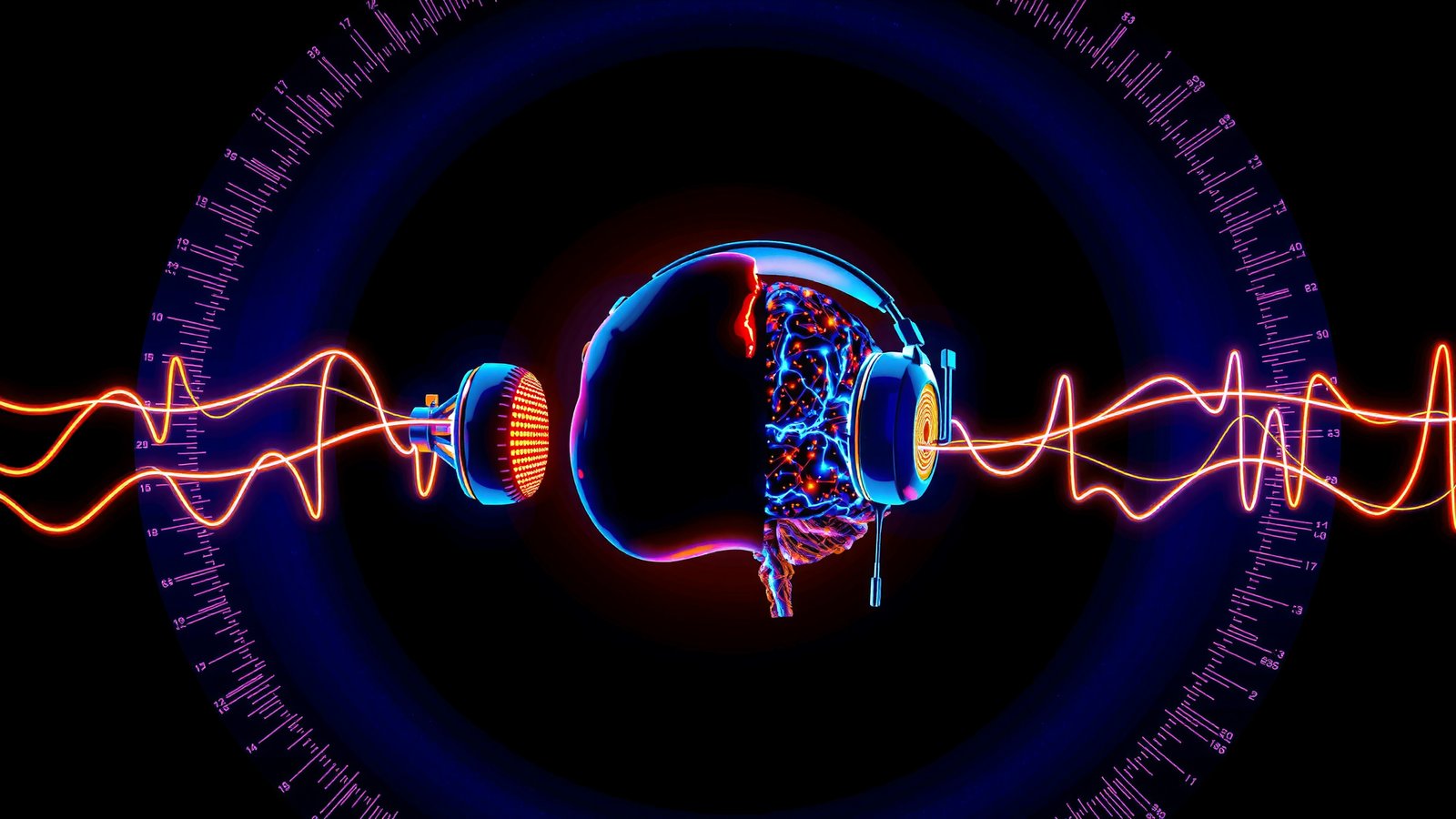
Play 200Hz in your left ear.
Play 210Hz in your right ear.
Then —
your brain internally creates a nonexistent “10Hz” sound.
And your brainwaves begin to synchronize with that 10Hz.
This is binaural beats:
a neuroscience-based sound technology using ear-to-ear frequency differences to control brainwaves.
Discovered in 1839, popularized as “brain hacking” in the 1970s,
now built into Apple, Spotify, Calm in the 2020s —
used worldwide by focus-seekers, sleep-seekers, meditators.
💎 Key takeaway
Binaural beats = “a sound hack that entrains brainwaves using the frequency difference between ears.” Optimizes focus, meditation, sleep with neuroscience.
30-second summary
- Binaural beats = slightly different frequencies to each ear
- Brain creates the difference frequency as auditory hallucination
- Brainwaves synchronize to that frequency (frequency following response)
- Discovered: 1839, Heinrich Wilhelm Dove
- 5 brainwave bands: delta, theta, alpha, beta, gamma
- Effects: focus, meditation deepening, sleep improvement, anxiety reduction
- Headphones required (for left-right separation)
- Free on YouTube, Spotify, Calm
1. What are binaural beats?
1-1. Basic principle
Bi (two) + naural (ears) = binaural
- Left ear: 200Hz
- Right ear: 210Hz
- Difference: 10Hz
- Brain perceives “10Hz sound“
→ This 10Hz affects brainwaves.
1-2. Science of the “hallucination”
Actually, no 10Hz sound plays.
But when the brainstem’s superior olivary nucleus
integrates the left-right sounds,
it perceives the “difference frequency.“
→ Binaural beat.
1-3. Frequency Following Response (FFR)
Brain property:
– Sustained listening to a specific frequency
– Brainwaves approach that frequency
– → Synchronize
Binaural beats use this FFR.
1-4. Why headphones are needed
- Left-right separation essential
- Speakers mix them
- Must use headphones, earbuds
2. Five brainwave bands
The brain’s electrical activity classified by frequency:
2-1. Delta (δ): 0.5–4Hz
- Deep sleep (NREM)
- Unconscious
- Cell repair, growth hormone
Binaural use:
– Sleep difficulty
– Want deep sleep
– Morning fatigue
2-2. Theta (θ): 4–8Hz
- Deep meditation
- REM sleep, dreams
- Creativity, intuition
Binaural use:
– Meditation deepening
– Creative work
– Subconscious access
2-3. Alpha (α): 8–13Hz
- Relaxed wakefulness
- Light meditation
- Pre-focus preparation
Binaural use:
– Stress reduction
– Light focus
– Study, reading
2-4. Beta (β): 13–30Hz
- Normal wakefulness
- Logical thinking
- Problem solving
Binaural use:
– Focus boost
– Work performance
– Attention up
2-5. Gamma (γ): 30+Hz
- Higher cognition
- Information integration
- Memory, learning
Binaural use:
– Memory up
– Learning ability
– Advanced focus
3. History — 180 years of research
3-1. Discovery (1839)
- Heinrich Wilhelm Dove (Prussian physicist)
- Discovered perceptual phenomenon of ear frequency difference
- Published paper
3-2. 100 forgotten years
- Not an academic interest
- Publicly unknown
3-3. Rediscovery (1973)
- Dr. Gerald Oster
- Scientific American article
- Proposed “relation to brainwaves“
- Monroe Institute (Robert Monroe) begins research
3-4. Monroe Institute and Hemi-Sync
- 1970s develops Hemi-Sync
- Consciousness-state control programs
- US patent
3-5. Spiritual culture (1980–90s)
- “Brain hacking” technique
- Meditation, OBE, expanded consciousness
- New Age popularity
3-6. Digital era (2000s–)
- MP3 spreads it
- YouTube/Spotify: huge library
- Sleep/focus apps integrate
3-7. Research growth (2010s–)
- Peer-reviewed papers grow
- Both supportive and skeptical
3-8. Contemporary (2020s)
- Calm, Headspace adopt
- Endel, Brain.fm specialized apps
- Corporate training uses
4. Scientific effects
4-1. ✅ Moderate evidence: anxiety reduction
2019 meta-analysis:
– 22 studies pooled
– Binaural beats significant anxiety reduction
– Especially pre-surgical anxiety
4-2. ✅ Moderate evidence: focus
2015 research:
– 40Hz gamma binaural beats
– Attention task performance up
– Memory test significant
4-3. ✅ Partial evidence: sleep improvement
- Delta entrainment shortens sleep latency
- Deep sleep increase
- Subjective sleep quality up
- Objective sleep metrics vary by study
4-4. ✅ Partial evidence: pain reduction
- Chronic pain adjunct therapy
- Post-surgical anxiety and pain reduction
- Via relaxation
4-5. ⚠️ Debated: meditation deepening
- Subjectively many feel it
- Objective brainwave change evidence is limited
- Beyond placebo? Under debate
4-6. ⚠️ Some research denies
- Some studies show no difference from placebo
- Individual variance high
- Expectation effect large
4-7. Full picture
Certain:
– Relaxation effect
– Nearly zero side effects
– Worth trying
Uncertain:
– Not all-powerful
– Individual variance high
– Not therapy replacement
5. Which frequency for what?
5-1. Want deep sleep
Recommended: Delta (1–4Hz)
Example:
– 200Hz + 202Hz (diff 2Hz)
– 100Hz + 103Hz (diff 3Hz)
Use:
– Start 30 min before bed
– Low volume
– Headphones may disturb sleep → bedside speaker (weaker effect)
5-2. Want to deepen meditation
Recommended: Theta (4–8Hz)
Example:
– 200Hz + 206Hz (diff 6Hz)
Use:
– 30 min during meditation
– Medium volume
– Headphones required
5-3. Want to relax
Recommended: Alpha (8–13Hz)
Example:
– 200Hz + 210Hz (diff 10Hz)
Use:
– Work break time
– Lunch break
– Post-work reset
5-4. Want to focus
Recommended: Beta (14–20Hz)
Example:
– 200Hz + 215Hz (diff 15Hz)
Use:
– Desk work
– Study
– Moderate volume
5-5. Memory / learning
Recommended: Gamma (40Hz)
Example:
– 200Hz + 240Hz (diff 40Hz)
Use:
– Memorizing
– Learning
– Short (1–2 hours)
5-6. Creativity
Recommended: Theta/Alpha boundary (7–9Hz)
– Consciousness/subconscious boundary
– For ideation
6. Practice — complete guide
6-1. What you need
- Headphones or earbuds (required)
- Quiet environment
- Phone or PC
- Source (YouTube, Spotify, etc.)
6-2. Basic steps
- Decide purpose (focus? sleep? meditation?)
- Choose corresponding brainwave band
- YouTube search “Binaural Beats [purpose]“
- Put on headphones
- Play at low-medium volume
- 10–30 min (per purpose)
6-3. Volume
- Low volume basic
- As background
- Listen unconsciously
6-4. Duration
- 10 min: short focus
- 30 min: meditation, relax
- 1 hour: work focus
- 8 hours: bedtime BGM
6-5. Frequency of use
- Daily OK
- No dependency
- Days without effect: use another method
6-6. Music vs pure tone
- Pure tone: scientifically pure
- Music-based: easier to continue
- Nature sound: best BGM
7. Famous apps and services
7-1. Free
YouTube:
– “Binaural Beats” huge library
– “528Hz Binaural” etc.
– 8-hour BGM common
Spotify, Apple Music:
– Many Binaural Beats playlists
– Unlimited via subscription
Insight Timer (app):
– Meditation app, free
– Many binaural options
7-2. Paid (high quality)
Brain.fm:
– Neuroscience-based music
– Focus, relax, sleep
– ~$6.99/month
Endel:
– AI-personalized sound
– Apple Watch integration
– ~$4.99/month
Calm:
– Comprehensive meditation
– Includes binaural
– ~$14.99/month
Headspace:
– Comprehensive meditation
– ~$12.99/month
Hemi-Sync (Monroe Institute):
– Original, serious
– Pricey, enthusiast level
7-3. How to choose
- Start free
- If effects felt, go paid
- Focus/sleep specialized apps convenient
8. Cautions
8-1. Situations to avoid
- While driving (dangerous)
- Operating critical machinery
- Emergency response situations
8-2. Medical cautions
- Epilepsy: caution
- Pacemaker: doctor consult
- Mental illness treatment: attending physician
8-3. General cautions
- Long headphone use = ear strain
- Don’t raise volume
- Don’t become dependent (effects may fade)
8-4. For children
- Age 6+ recommended
- Short duration (~15 min)
- Gentle frequencies (theta, alpha)
- Volume caution
10. FAQ
Q1. Do brainwaves really change?
A. Some studies confirm. Individual variance. Many experience subjective changes.
Q2. Time to effect?
A. 7–10 min for brainwave shift said. Habitual users faster.
Q3. Speakers OK?
A. NO. Left-right separation required. Headphones, earbuds recommended.
Q4. Safe for how many hours?
A. 8 hours generally safe. Watch ear strain.
Q5. AirPods OK?
A. OK. Wireless works.
Q6. Not feeling effect?
A. Change frequency, change source, continue 2 weeks.
Q7. Addictive?
A. No physical addiction. Psychological habituation possible, no harm.
Q8. Difference from solfeggio?
A. Solfeggio: specific sound frequencies. Binaural: entrains brainwaves via ear-difference. Different, combinable.
Q9. Pregnancy OK?
A. Generally safe. Avoid loud volume. Doctor consult for peace of mind.
Q10. Kids OK?
A. Age 6+, short, gentle frequencies.
11. Closing — tune the brain with sound
200Hz and 210Hz —
just 10Hz difference
transforms your brain into:
relaxation, focus, deep sleep, creativity, transformation.
This isn’t magic, it’s science.
Discovered 180 years ago,
rediscovered 50 years ago,
now daily used by
brain-hackers, meditators, knowledge workers worldwide.
And the entry is free.
Tomorrow, search YouTube
for “Binaural Beats Focus 40Hz.”
Put on headphones,
low volume,
do desk work for 30 min.
You’ll feel
“I’m more focused than usual.“
That’s your brain synchronizing to the 10Hz difference, in progress.
The ear secret discovered by a 180-year-old physicist
changes your 21st-century work.
References
- Oster, G. (1973). “Auditory beats in the brain.” Scientific American.
- Dove, H. W. (1839). Repertorium der Physik. (Discovery of binaural phenomenon)
- Chaieb, L. et al. (2015). “Auditory beat stimulation and its effects on cognition and mood states.” Frontiers in Psychiatry.
- Garcia-Argibay, M. et al. (2019). “Efficacy of binaural auditory beats in cognition, anxiety, and pain perception: A meta-analysis.” Psychological Research.
- Wahbeh, H. et al. (2007). “Binaural beat technology in humans: A pilot study.” Journal of Alternative and Complementary Medicine.
MuZenCosmos — Where cosmos meets silence | 10Hz difference and your brain
This article does not guarantee any medical or health benefit and is not a substitute for professional medical care. If you have any health concerns, please consult a physician or other qualified professional.