“Solfeggio frequencies are sacred sounds passed down from ancient times” — this kind of description is common across the internet. But what does “ancient” actually mean in this context? Where did the information come from, and what does science make of it?
This article traces the history of Solfeggio frequencies honestly. Without dismissing the appeal of the mythological narrative — but carefully distinguishing what actually happened from what didn’t.
Quick Summary (3 minutes)
- The modern system of Solfeggio frequencies (396–963 Hz) was presented by Dr. Joseph Puleo in the 1990s and has no direct connection to ancient music.
- The starting point was a numerological analysis of a medieval Gregorian chant hymn called “Ut queant laxis.”
- The word “solfeggio” itself is a musical education term (the system of singing scales: do, re, mi…) that has existed since the Middle Ages.
- The narrative of “lost sacred tones” is compelling but not academically confirmed.
- That said, the real experience of many millions of practitioners — that these frequencies affect mood, emotion, and bodily sensation — is not nothing.
1. What “Solfeggio” Originally Means
Solfeggio (also solfège) is originally a music education term. It refers to the practice of reading and singing musical scales using syllables — Ut, Re, Mi, Fa, Sol, La — which in modern usage became Do, Re, Mi, Fa, Sol, La, Si (Ti). This method is attributed to 11th-century Italian monk Guido d’Arezzo.
The source text was the Latin hymn “Ut queant laxis” — a hymn to St. John the Baptist. The first syllable of each line happened to align with the ascending pitches of the scale, making it a useful memory device for singers learning to read music.
In other words, “solfeggio” was originally a mnemonic for music education — not a secret system of sacred frequencies.
2. The Relationship to Gregorian Chant
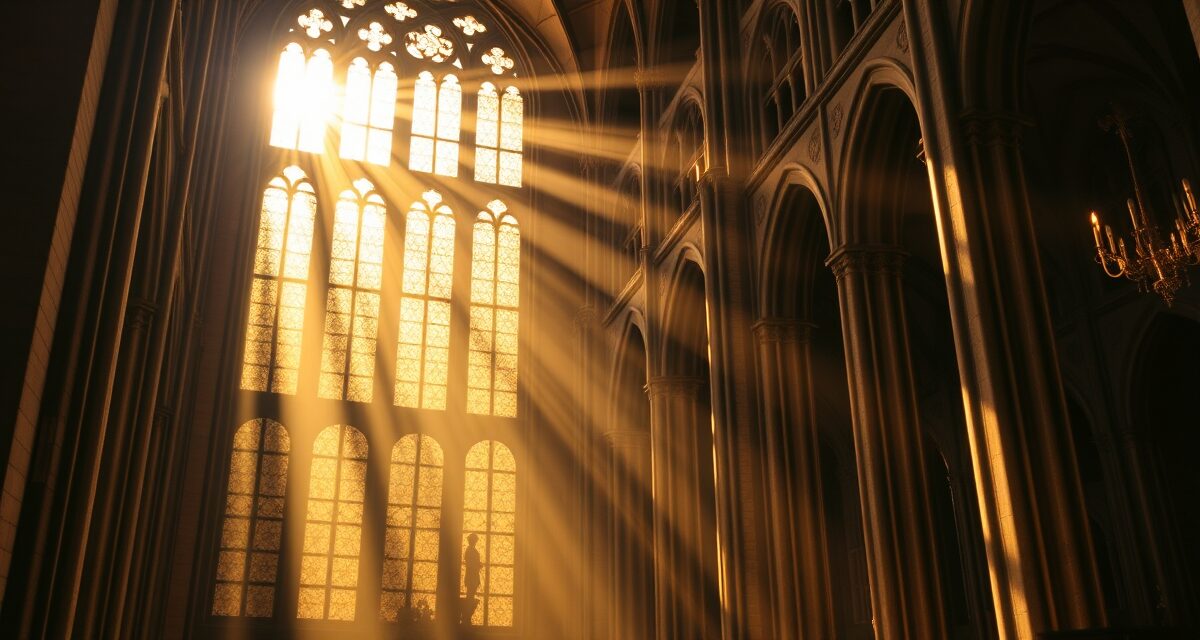
In medieval European monasteries, Gregorian chant was the core of worship. This monophonic vocal music evolved in deep alignment with the acoustic properties of stone church spaces.
Worth noting:
- Cathedral and monastery architecture (stone, vaulted ceilings, resonant chambers) naturally amplifies certain frequency ranges — roughly 100–600 Hz
- Some musicologists have observed that Gregorian chant tends to occupy the frequency range where those acoustic spaces resonate most richly
- However, there is no historical record establishing that specific numerical values (396 Hz, 528 Hz, etc.) were intentionally embedded in Gregorian chant
That Gregorian chant resonated with sacred spaces, and that singing had profound effects on the monks who practiced it, is historically well-documented. The direct connection between ancient chant and the modern Solfeggio frequency system is a retrospective interpretation, not a verified historical fact.
3. Joseph Puleo and the 1990s “Rediscovery”
The direct origin of the modern Solfeggio frequency system is 1990s America.
Joseph Puleo, a naturopathic physician, claimed to have analyzed specific passages in the Book of Numbers (chapters 7:12–83) using a numerological method (modular arithmetic) and extracted a series of numbers: 396, 417, 528, 639, 741, 852. These became the original six “Solfeggio frequencies.”
Puleo’s research was published in 1999 as a co-authored book with Leonard Horowitz: Healing Codes for the Biological Apocalypse. This publication was the single largest catalyst for spreading Solfeggio frequencies into New Age healing culture.
Critical context:
- This “biblical extraction” methodology is not recognized in academic mathematics or biblical scholarship
- Horowitz later focused particularly on 528 Hz, labeling it “the love frequency” and citing MRI data and plant growth experiments in support — some of which attracted scientific criticism
- Despite this, testimonials from practitioners experiencing real effects accumulated worldwide
4. The Three Extended Frequencies (174, 285, 963 Hz)
Beyond the original six frequencies (396–852 Hz), three additional tones were later added to form the “extended Solfeggio.”
| Frequency | How It Entered the System |
|---|---|
| 174 Hz | Added as practitioners reported deep rest and pain-relief effects |
| 285 Hz | Associated with cellular regeneration and tissue repair |
| 963 Hz | Added as the Crown Chakra / cosmic consciousness correspondent |
These three were not “discovered” through any equivalent of Puleo’s process — they were absorbed organically into the system as healing culture expanded around it.
5. The 440 Hz Controversy
The Solfeggio narrative often includes claims about 440 Hz tuning being “artificial” and “unnatural.”
Historical facts:
- The 440 Hz international tuning standard was adopted in 1939
- Before that, Western music tuning varied widely by era, region, and instrument — from approximately 415 Hz to 466 Hz
- The claim that “440 Hz was introduced by Nazi Germany or the Rockefellers to harm humanity” is a conspiracy theory without historical support
On 432 Hz: Some practitioners advocate 432 Hz as “the natural tuning.” There is mathematical beauty to this argument (connections to Pythagorean temperament and certain natural ratios), and some listeners report 432 Hz music feels warmer. But the claim that 432 Hz has special biological or spiritual effects not shared by other tunings is not established science.
6. What Science Says
Rigorous scientific research on Solfeggio frequencies as a specific system is limited. However, related research exists:
- Music and the autonomic nervous system: Multiple studies demonstrate that music affects heart rate variability (HRV), cortisol levels, and autonomic balance
- 528 Hz research: Small-scale studies have suggested effects on cellular stress reduction, alcohol detoxification, and autonomic nervous system response — though quality and reproducibility vary
- Other Solfeggio frequencies: Direct research into frequency-specific effects beyond 528 Hz is sparse
The honest summary:
There is no historical evidence that Solfeggio frequencies were “sacredly transmitted from ancient times.” But research suggesting that specific frequencies affect human physiology, mood, and the autonomic nervous system is ongoing — and the hypothesis is not dismissed.
7. Why Solfeggio Frequencies Still Have Value
Setting aside the historical mythology, the practice retains genuine value:
Reason 1: Real-world effects beyond placebo Millions of people report “396 Hz makes my body soften” and “528 Hz warms my chest.” Calling this placebo is technically possible — but neuroscience recognizes placebo effects as genuine physiological phenomena, not “fake” responses.
Reason 2: Intentional listening itself is valuable Listening with a specific purpose (release, restoration, connection) is a form of directed attention that independently activates the parasympathetic nervous system and supports inner reflection.
Reason 3: Ritual and rhythm as anchors Full moon practice, daily morning routine, pre-sleep sequence — Solfeggio frequencies function as anchors for “intentional pauses.” This function is real regardless of where the frequencies came from.
8. Frequently Asked Questions
Q1. Were Solfeggio frequencies truly “lost” and rediscovered? A. The “lost and rediscovered” narrative comes from Puleo’s framing in his writings, but this is not academically supported history. There are no records showing these specific frequency values were systematically used in medieval times.
Q2. Is Guido d’Arezzo’s solfeggio the same as modern Solfeggio frequencies? A. They share a name but are distinct concepts. Guido’s solfeggio is a pedagogical method for singing scales. Modern Solfeggio frequencies are a healing music framework systematized in the 1990s.
Q3. Why is 528 Hz called the “miracle tone”? A. Primarily due to Horowitz’s widespread promotion. The word “miracle” derives from the Latin text “Mi mira gestorum” (miracle of your deeds) in the Ut queant laxis hymn — but connecting this text to specific Hz values has no scholarly basis. The widespread personal reports of 528 Hz feeling special to listeners, however, are real.
Q4. Can someone who doesn’t believe any of this history still use Solfeggio frequencies? A. Absolutely. “Listening to specific calm music to promote relaxation” works regardless of any beliefs about ancient origins. The practical value doesn’t require the mythology.
9. Closing Thoughts
The history of Solfeggio frequencies is a layered story: medieval music education, the acoustics of Gregorian chant in stone cathedrals, the speculative research of 1990s American natural health practitioners, and the accumulated experience of millions of people who have found something real in these tones.
Neither “scientifically proven ancient secret” nor “baseless nonsense” — the truth sits somewhere richer than either extreme, in the ongoing human exploration of what sound does to the body, the mind, and the heart.
Sound has moved people for thousands of years. The scientific explanation is still catching up.
🌌 MuZenCosmos — Sound of the Inner Cosmos A quiet encounter with the cosmos.
- Website: https://muzencosmos.com
- YouTube: [Channel link]
Disclaimer: This article is for informational and relaxation purposes only and is not intended as a substitute for medical advice.