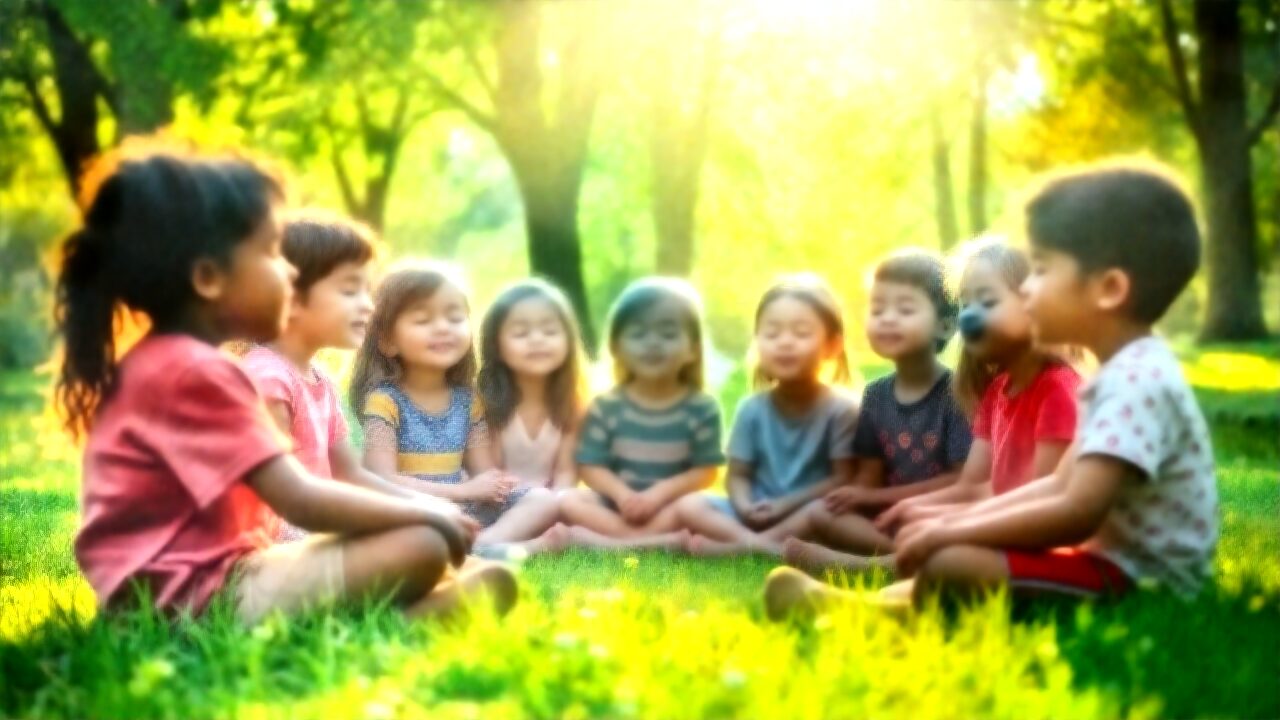
“Sit still.” “Calm down.” “Stop being so anxious.”
These are the words we tell stressed children. But here’s the problem: kids don’t know how.
Mindfulness gives children the how.
Not as a punishment. Not as a quiet-down tool. But as a lifelong skill they will carry into adulthood—the ability to notice their own minds, regulate emotions, and respond rather than react.
Programs like MindUP, MindfulSchools, and Inner Explorer are now in tens of thousands of schools worldwide.
Research from UCLA, Harvard, and Cambridge confirms what teachers see in classrooms: mindfulness changes children.
This article is the complete guide—age by age, technique by technique, with the science to back it up.
💎 The One-Line Takeaway A child who learns mindfulness at 7 will navigate life differently than one who learns it at 47. The earlier, the more compounding the gift.
Kids do not need a cushion or a mantra to already have moments of total presence — watch one stare at a bug for five minutes. This article is about gently building on what is already there.
30-Second Summary
- Children can learn mindfulness from age 3
- Benefits: emotional regulation, focus, empathy, sleep, fewer outbursts
- Techniques scale by age: from bell games (3-5) to breath awareness (6-10) to full meditation (teens)
- 5 minutes daily is enough
- Modeling by adults is the strongest teacher
- Available in schools via MindUP, MindfulSchools, Inner Explorer
1. Why Kids Need Mindfulness More Than Ever
1-1. Modern Childhood Stress
- Screen overload (3-7 hours/day average for children 8-12)
- Academic pressure
- Social media (for older kids)
- Anxiety disorders up 25% in adolescents over the last decade
- Sleep deficits in 60% of teens
1-2. Underdeveloped Self-Regulation
The prefrontal cortex (judgment, impulse control) doesn’t fully develop until age 25. Kids literally lack the brain hardware to manage emotions without skills.
Mindfulness is prefrontal cortex training.
1-3. The Compound Effect
A child who learns to notice their own emotions at 7 has a 20-year head start by the time they’re an adult.
2. The Science of Kids’ Mindfulness
2-1. UCLA’s Mindful Awareness Research Center
Studies in elementary classrooms found 8-week mindfulness programs improved:
- Executive function
- Working memory
- Behavior regulation
2-2. MindUP Research (Schonert-Reichl)
Fourth- and fifth-graders who completed MindUP showed:
- 24% improvement in social behaviors
- 24% reduction in aggression
- 15% increase in math scores
2-3. Inner Explorer Pre-K
Pre-K children using daily 5-10 minute mindfulness audios showed:
- Improved attention
- Reduced behavioral incidents
- Better social play
2-4. Adolescent Brain Studies
fMRI on teens shows mindfulness increases prefrontal cortex activity and reduces amygdala reactivity—the exact opposite of adolescent emotional volatility.
3. Age-by-Age Techniques
3-1. Ages 3-5 (Preschool)
Attention span: 1-3 minutes
Best techniques:
- Bell listening game: Ring a bell, child raises hand when they can no longer hear it
- Pinwheel breathing: Long exhale to spin a pinwheel
- Belly buddy: Lie down, place stuffed animal on belly, watch it rise and fall
- 5 senses safari: Find 1 thing for each sense
- Mindful eating: One raisin, full attention (the classic raisin exercise)
3-2. Ages 6-10 (Elementary)
Attention span: 3-10 minutes
Best techniques:
- Glitter jar: Shake a jar of glitter water, watch it settle, breathe along
- Breath counting (1-10)
- Body scan (3-5 minutes guided)
- Emotion weather report: “Today my emotions are like…”
- Spider-sense walks: Walk outside, notice 5 sounds
- Kindness rocks: Hold a rock, send kind thoughts
3-3. Ages 11-13 (Tweens)
Attention span: 10-15 minutes
Best techniques:
- 4-7-8 breathing
- Loving-kindness phrases
- Gratitude journal (3 things daily)
- Box breathing for sports/tests
- Mindful tech breaks
3-4. Ages 14-18 (Teens)
Attention span: 15-20 minutes
Best techniques:
- Standard meditation (10-20 minutes)
- Yoga nidra —
- App-based programs (Headspace teens, Calm)
- Body scan for sleep
- Mindful social media use (notice the urge before checking)
4. The Glitter Jar (Universal Favorite)
This single tool has become iconic in kids’ mindfulness.
4-1. How to Make
- Jar with secure lid
- Water + glitter glue + extra glitter
- Optional: food coloring
4-2. How to Use
When emotions are stormy:
- Shake the jar
- “This is your mind right now—busy, swirling**”
- “Let’s watch the glitter settle“
- “As we breathe, our mind settles too“
- After 2-3 minutes, the glitter has settled
A perfect external metaphor for what’s happening inside.
5. School Programs
5-1. MindUP
- 15-lesson curriculum
- Goldie Hawn Foundation
- Used in thousands of schools globally
5-2. MindfulSchools
- Teacher training programs
- K-12 curricula
5-3. Inner Explorer
- Daily audio program (5-10 min)
- Pre-K through high school
- In thousands of US classrooms
5-4. .b (UK)
- 10-lesson teen program
- Mindfulness in Schools Project
5-5. Smiling Mind (Australia)
- Free app and school programs
- Strong evidence base
6. How Parents Should Approach It
6-1. Model It Yourself
Children imitate, they don’t comply with lectures.
- Let them see you meditate
- Let them see you take a breath when frustrated
- Let them see you fail and recover
6-2. Make It a Game
- Don’t call it “meditation” for young kids
- “Special breathing game“
- “Listening superhero training“
6-3. Build into Routine
- 2 minutes before dinner
- 5 minutes before bed (great for sleep — see our meditation for insomnia guide)
- 1 minute before homework
6-4. Never Use as Punishment
“Go meditate” as a punishment poisons the practice. Mindfulness should be associated with safety and self-care.
6-5. Celebrate, Don’t Test
Don’t quiz them on “what did you notice?” Just normalize the practice.
7. Sound Tools for Kids
7-1. Best Sounds
- Bells (singing bowls, chime) — 174Hz + 396Hz + 432Hz | Triple Solfeggio Sleep Stack + Delta Binaural + Brown Noise Vol.1究極深眠スタック
- Nature sounds (ocean, rain)
- Gentle music without lyrics
7-2. Solfeggio for Kids
- 528 Hz (calm, healing) — 528Hz Pure 3 Hours | Miracle Tone for Love & Healing | Solfeggio 奇跡の周波数 3時間|愛と調和のソルフェジオ
- 396 Hz (releasing fear) — Can’t Sleep? 396Hz Let Go of Fear & Anxiety | 8 Hours Deep Sleep Music/眠れない夜に|396Hz 恐れと不安を手放す睡眠音楽 – YouTube
7-3. Sleep Stories
Apps with kid-specific sleep stories (Calm Kids, Headspace Kids, Smiling Mind Kids).
8. Mindfulness for Special Cases
8-1. ADHD
- Short sessions (1-3 minutes max)
- Movement-based (walking, yoga)
- Sensory anchors (texture, weighted blanket)
- Studies show genuine benefit, but tailor to attention span
8-2. Autism
- Predictable structure
- Sensory accommodations
- Avoid forced eye-closure if uncomfortable
8-3. Anxiety Disorders
- 4-7-8 breathing (often dramatic effects)
- Grounding techniques —
- Combined with therapy, not as replacement
8-4. Trauma History
- Use trauma-sensitive mindfulness
- Always optional, never forced
- Eyes-open variants
- Work with a professional
9. Common Mistakes Parents Make
9-1. Too Long
A 6-year-old can’t do 20 minutes. Start with 1 minute.
9-2. Lecturing About Benefits
Kids don’t care about “stress reduction.” They care about playing the bell game.
9-3. Punishing Failure
If they squirm, fidget, or laugh—that’s normal. Don’t shame them.
9-4. Inconsistency
5 minutes daily > 30 minutes once a month.
9-5. Forcing It
Mindfulness is invitational. If they refuse, drop it for a week.
10. FAQ
Q1. At what age can kids start? A. Even toddlers respond to “belly buddy” breathing. Formal practice from age 3.
Q2. What if they say it’s boring? A. Make it shorter, gamier, more sensory. Don’t fight resistance.
Q3. Can mindfulness help with school anxiety? A. Yes, especially box breathing before tests.
Q4. Apps for kids? A. Calm Kids, Headspace for Kids, Smiling Mind, Inner Explorer. See our meditation app comparison.
Q5. How do I get the school involved? A. Share evidence (MindUP, Inner Explorer) with the principal. Many schools welcome it.
11. Conclusion — The Greatest Gift
The next generation will face challenges we cannot foresee.
What we can give them: the inner toolkit to face anything.
Mindfulness is not a band-aid. It’s a lifelong superpower.
A child who can pause before reacting, notice their emotions, return to their breath—that child grows into an adult who can do the same in board meetings, in conflicts, in grief.
Start tonight. 60 seconds. Belly buddy. Watch it rise and fall.
That’s the beginning of something extraordinary.
References
- Schonert-Reichl, K. A. et al. (2015). “Enhancing cognitive and social-emotional development through a simple-to-administer mindfulness-based school program.” Developmental Psychology.
- Zenner, C. et al. (2014). “Mindfulness-based interventions in schools.” Frontiers in Psychology.
- Greenberg, M. T. & Harris, A. R. (2012). “Nurturing mindfulness in children and youth.” Child Development Perspectives.
- Black, D. S. & Fernando, R. (2014). “Mindfulness training and classroom behavior among lower-income and ethnic minority elementary school children.” Journal of Child and Family Studies.
- Saltzman, A. (2014). A Still Quiet Place. New Harbinger.
MuZenCosmos — Where stillness meets the cosmos.
This article does not guarantee any medical or health benefit and is not a substitute for professional medical care. If you have any health concerns, please consult a physician or other qualified professional.
📚 Related Articles
- The Power Nap: How 20 Minutes Can Double Your Afternoon Productivity
- Designing the Morning Routine: The First 60 Minutes That Shape Your Day
- Designing the Evening Routine: The 90 Minutes That Determine Your Sleep
- How to Design a Sleep-Optimized Bedroom: Light, Temperature, Sound, Scent
🎵 Listen Along with This Article
Experience this article’s theme through sound.
🔔 Subscribe to MuZenCosmos for new healing soundscapes.