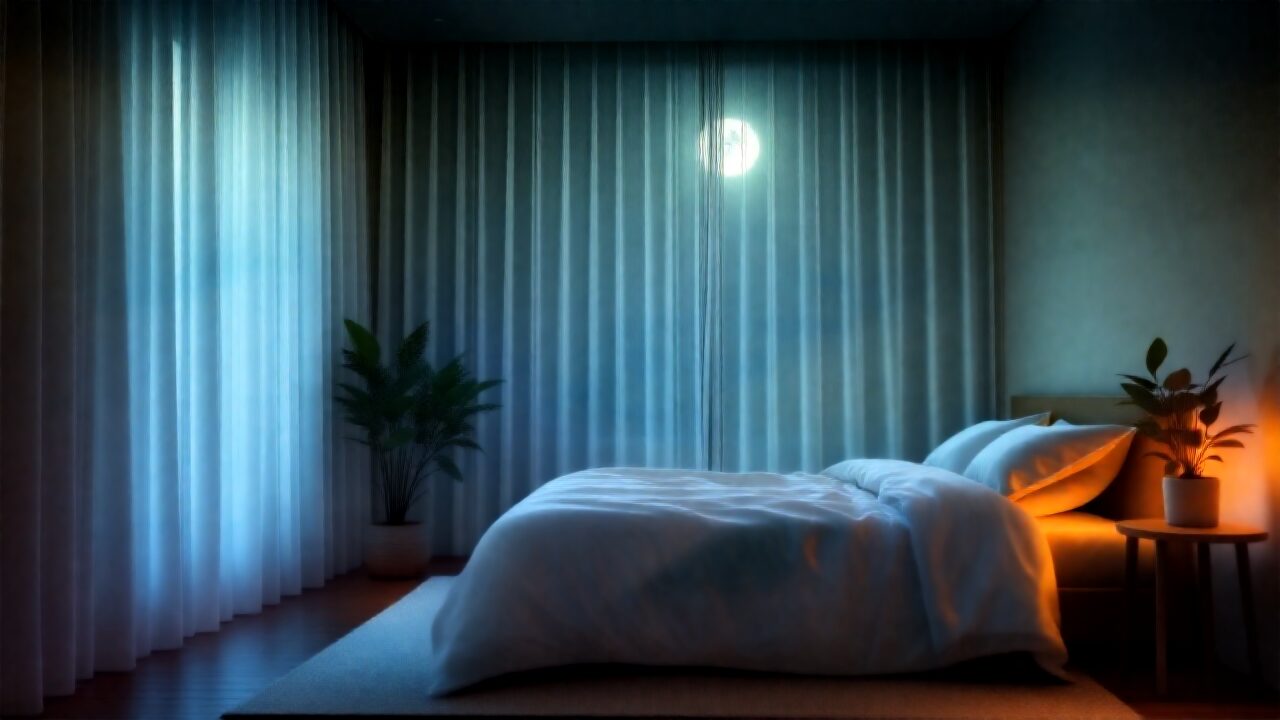
“I sleep 8 hours and still feel tired.” “I wake up multiple times at night.” “My head feels heavy in the morning.“
90% of these issues come down to bedroom environment.
Even the best mattress fails when the room is 28°C with streetlight leaking in and noise from the next room.
Conversely, with the right environment, even basic bedding produces dramatic sleep improvement.
This article is a complete bedroom optimization guide based on neuroscience and sleep medicine, prioritized for action.
💎 The One-Line Takeaway The bedroom is a sanctuary for sleep only. Optimize light, temperature, sound, and scent, and pills become unnecessary.
30-Second Summary
- Optimal temperature: 16-19°C / 61-67°F
- Complete darkness boosts deep sleep (N3)
- White/pink noise reduces wakings
- Lavender scent speeds sleep onset
- Replace mattress every 8-10 years
- Pillow should preserve natural neck curve
- No work tools or phones in the bedroom
1. The “Sanctuary” Principles
1-1. Sleep-Only Space
In the bedroom:
- Don’t work
- Don’t eat
- Limit phone/PC time
This conditions the brain to recognize the space as “sleep mode.”
1-2. Dark, Quiet, Cool
The three pillars of sleep science:
- Dark — full blackout
- Quiet — consistent stillness
- Cool — slightly cold
1-3. Comfort + Security
- Pleasant textures
- Sense of being held
- A space that says “you’ve arrived home”
2. Light Optimization — Darkness as Medicine
2-1. The Power of Total Darkness
Research: even faint light (streetlight level) can suppress melatonin by up to 50%.
→ Blackout curtains are the #1 investment.
2-2. Choosing Blackout Curtains
- Grade 1 blackout (99.99% blocking)
- Side covers along the rail to stop edge leaks
- 5cm longer than the window frame, 10cm wider on each side
2-3. Indoor LED Suppression
Hidden enemies:
- Air conditioner LED indicators
- Humidifier displays
- Smart speaker lights
- TV standby LEDs
Cover with black tape or fabric covers at night.
2-4. Eye Masks
- For imperfect curtains
- Travel and business trips
- Silk versions are gentle on skin
- Weighted eye masks are increasingly popular
2-5. Maximize Morning Light
Reverse the rule in the morning: flood your eyes with light:
- Open curtains fully
- 5 minutes outdoors
- Reset the body clock
3. Temperature & Humidity — The 16-19°C Sweet Spot
3-1. The Science
During sleep, body temperature drops by about 1°C. Falling core temperature triggers deep sleep.
Optimal room temperature:
- Winter: 16-18°C
- Summer: 18-19°C
Hotter = less deep sleep.
3-2. Air Conditioning
- Don’t turn it off at bedtime
- Winter: 18°C
- Summer: 26-27°C (avoid direct air on body)
- Run all night instead of timed off
3-3. Humidity
- 40-60% ideal
- Dryness affects throat and nose
- Humidifier especially in winter
3-4. Bedding for Season
- Summer: linen, hemp
- Winter: down, wool
- Seasonal bedding swap is essential
4. Sound — Stillness or Steady Hum
4-1. The Ideal
Under 40 dB (library level).
But total silence can make people wake at the slightest sound.
4-2. White Noise
A constant background sound prevents waking.
| Noise | Profile | Best For |
|---|---|---|
| White | Equal across frequencies | Focus |
| Pink | Closer to natural sounds | Sleep optimal |
| Brown | Heavier low end | Deep relaxation |
Details:
4-3. Recommended Sound Machines
- LectroFan
- Hatch Restore
- Smart speaker apps (Calm, Headspace sleep)
4-4. Nature Sounds
- Rain: research-validated deep sleep promoter
- Ocean: rhythmic regularity
- Night forest: rich in low frequencies
4-5. Frequency-Based Music
MuZenCosmos recommends:
- 174 Hz → Held by Ancient Cedars in Pre-Dawn Mist | 174Hz Sacred Forest/夜明けの霧、古杉の腕の中で
- 528 Hz → 528Hz Pure 3 Hours | Miracle Tone for Love & Healing | Solfeggio 奇跡の周波数 3時間|愛と調和のソルフェジオ – YouTube
- Delta binaural beats → 174Hz + 396Hz + 432Hz | Triple Solfeggio Sleep Stack + Delta Binaural + Brown Noise Vol.1究極深眠スタック
4-6. Soundproofing
- Window soundproof film
- Sound-blocking curtains
- Earplugs (last resort)
5. Scent — The Olfactory Shortcut
5-1. Lavender (King)
Multiple studies confirm:
- Faster sleep onset
- Increased deep sleep
- Reduced anxiety
5-2. Other Effective Scents
| Scent | Effect |
|---|---|
| Lavender | Calming, sleep onset |
| Chamomile | Gentle sedation |
| Bergamot | Anxiety relief |
| Cedarwood | Deep relaxation |
| Ylang Ylang | Stress release |
| Clary Sage | Hormonal balance |
5-3. Application
- Aromatherapy diffuser (start 1 hour before bed)
- Pillow spray (diluted)
- Pillow mist products
- Candles (extinguish before sleep)
5-4. Cautions
- High concentration causes headaches
- Verify pet safety (cats are sensitive)
- Pregnant women: consult a professional
6. Mattress — Supporting 1/3 of Your Life
6-1. Replacement Timing
- Every 8-10 years
- Sagging or imprinting = replace sooner
6-2. Types
| Type | Profile | Best For |
|---|---|---|
| Pocket coil | Pressure-distributing | Side sleepers, couples |
| Bonnell coil | Firm, affordable | Back sleepers |
| Memory foam (soft) | Body-cradling | Lighter bodies |
| High-rebound foam | No sinking | Lower-back issues |
| Latex | Resilient, durable | Natural material seekers |
| Air-fiber type | High breathability | Heat-prone sleepers |
6-3. Firmness by Body Weight
- Under 60 kg / 132 lb: softer
- 60-80 kg / 132-176 lb: medium
- 80+ kg / 176+ lb: firmer
When in doubt, lean toward firmer.
6-4. Testing Tips
- Lie for 15+ minutes in store
- Use your usual sleep position
- Test with partner if shared bed
7. Pillow — The Neck’s Best Friend
7-1. Height
Lying on your back:
- Preserves the natural neck curve
- 3-5 cm clearance from mattress
7-2. Materials
| Material | Profile |
|---|---|
| Down/feather | Soft, adjustable |
| Buckwheat hulls | Cool, breathable |
| Memory foam | Conforming |
| Plastic pipe | Breathable, washable |
| Microbeads | Flexible, adjustable |
7-3. Side Sleepers
Need height equal to shoulder width — thicker than back-sleeper pillows.
7-4. Custom Pillows
Several hundred dollars, but worthwhile for chronic shoulder/headache sufferers.
8. Sheets & Covers — Investing in What Touches Skin
8-1. Materials
- Quality cotton: year-round standard
- Linen: summer ideal, breathable
- Silk: gentle on skin/hair, premium
- Tencel: eco-friendly, comfortable
8-2. Thread Count
- 40+ count: good
- 60+ count: premium
- 80+ count: luxury
8-3. Washing Frequency
- Weekly minimum
- Twice weekly in peak summer
- Hot water once a month for dust mites
9. Bedroom Layout
9-1. Bed Position
- Away from window (light, airflow)
- Not directly facing the door
- Distance from electronics
9-2. Colors
- Earth tones (beige, brown, green)
- Blue palettes (calming)
- Avoid red, orange (stimulating)
9-3. Indoor Plants
Recommended:
- Sansevieria (releases oxygen at night)
- Pothos (air purifying)
- Aloe vera (night oxygen)
9-4. Minimalism
Less clutter = better mental ease.
10. Surviving Phone Addiction
10-1. Total Phone Banishment
- Don’t bring it in
- Charge in another room
- Use a dedicated alarm clock
10-2. If Inevitable
- Airplane mode
- Face down
- Notifications off except alarm
10-3. Choosing an Alarm Clock
- Light alarm (Philips Wake-Up Light, etc.): natural waking
- Vibration alarm: partner-friendly
- Analog clock: simple
11. Seasonal Adjustments
11-1. Spring
- Pollen care (bedding dust-mite control)
- Plenty of morning light
11-2. Summer
- Air conditioning on all night
- Linen bedding
- Cooling pillow pads
11-3. Autumn
- Adapt to sudden temperature shifts
- Prepare humidifier
11-4. Winter
- Humidification critical
- Down comforter
- Hot water bottle at feet
12. Bedroom Checklist
- [ ] Grade-1 blackout curtains
- [ ] All LEDs covered
- [ ] Temperature 16-19°C
- [ ] Humidity 40-60%
- [ ] Sound machine or frequency audio
- [ ] Aromatherapy diffuser
- [ ] Mattress under 8 years old
- [ ] Pillow preserves neck curve
- [ ] Quality cotton sheets
- [ ] No phone in bedroom
- [ ] 1-2 indoor plants
- [ ] No work tools
13. FAQ
Q1. Investment priority? A. Blackout curtains → temperature control → mattress → pillow.
Q2. Kids’ bedrooms? A. Same basics. Plus strict pre-sleep screen restrictions.
Q3. Partner has different sleep schedule? A. Consider separate bedrooms. Quality of sleep > shared room ideology.
Q4. Sleeping with pets? A. Sleep science says no (more wakings). Separate rooms preferred.
Q5. Renters’ workarounds? A. Everything still works. Start with blackout curtains, sound machine, aromatherapy.
14. Conclusion — Your Bedroom Is Your Highest-ROI Investment
We spend 1/3 of life in this room.
Yet most invest more in living-room furniture than in the bedroom.
That’s backwards.
The right mattress, pillow, blackout, temperature, and scent—
This is a lifespan-extending investment.
Tonight, set the temperature to 18°C.
That alone will change tomorrow morning.
References
- Walker, M. (2017). Why We Sleep. Scribner.
- Okamoto-Mizuno, K. & Mizuno, K. (2012). “Effects of thermal environment on sleep and circadian rhythm.” Journal of Physiological Anthropology.
- Goel, N. et al. (2005). “An olfactory stimulus modifies nighttime sleep.” Chronobiology International.
- National Sleep Foundation Bedroom Guidelines
- Japan Ministry of Health “Sleep Guideline 2014”
MuZenCosmos — Where stillness meets the cosmos.